

The Journal · Brass Hardware
Polished vs Satin Brass Cabinet Hardware — A Guide for US Kitchens
A considered guide to polished and satin brass cabinet hardware in American kitchens — how the same alloy becomes two different design decisions, when each finish wins, and how to mix them without breaking a room.
The strange part about brass is that the alloy under the finish is often identical — the same copper-zinc mix, the same weight in the hand — and yet the finish alone is enough to move a kitchen from Cotswold cottage to Brooklyn townhouse and back again. It is the rare material where the surface, not the substance, does the talking.
What actually is the difference
Both polished and satin brass begin at the foundry as the same material — a copper-zinc alloy cast solid and turned or forged into the shape of a knob or pull. What separates them is the last five minutes of the process. Polished brass is buffed on a rotating cloth wheel with a fine compound until the surface holds a mirror; the reflection is what you are looking at, and the metal beneath is almost incidental to the visual. Satin brass is finished the other way — brushed with a directional abrasive that opens the surface into thousands of tiny lines, killing the reflection and leaving a soft matte honey.
Neither is more expensive than the other at the foundry. What differs is how the finish behaves over time, how it sits in the room, and how it forgives — or does not forgive — the daily contact of a working kitchen.
Polished brass — the case for it
Polished brass is the finish with history in it. It was the standard in Georgian and Federal houses, in Charleston kitchens and Boston pantries, in every English country manor that has ever been photographed for a book. When it is left unlacquered — as our solid brass is — it patinas. The mirror softens over five to ten years of use into something warmer and more human, with the darker tone settling into the recessed detail and the raised surfaces staying brighter where hands touch them. A polished brass knob in year one is a piece of jewellery; in year ten it is a piece of the room.
It suits a certain kind of kitchen — English country cabinetry in deep greens and hunter tones, Southern classic in creams and warm whites, Federal-era joinery, any space where the paint carries a note of history. The Mughal Brass Cabinet Knob and the Elizabeth Mother of Pearl Cabinet Knob in Polished Brass are the pieces we most often send to clients working in that register.
The one caveat is fingerprints. A high polish shows them, and if a knob is set at the height of a child's hand, the mirror will read as smudged more often than it reads as bright. Owners who love polished brass love it enough to give it the occasional wipe with a soft cloth; owners who don't tend to migrate toward satin within a year.
Satin brass — the case for it
Satin brass is what modern American design has, for the past six or seven years, quietly agreed upon. Walk through any recently finished kitchen in Brooklyn, Austin or Denver and the odds are high that the bar pulls are satin brass — matte, warm, forgiving. The finish does not patina in the same way polished brass does, because the brushed texture is already the finish; oxidation still happens, but it settles into the surface rather than announcing itself. What you see in year one is close to what you see in year ten.
The great advantage of satin is that it lives easily. Fingerprints disappear into the matte surface. A splash of water dries without leaving a mark. Cooking oil wipes clean with a dry cloth. In a working kitchen, especially one with young children or a serious cook, this matters more than it sounds like it should.
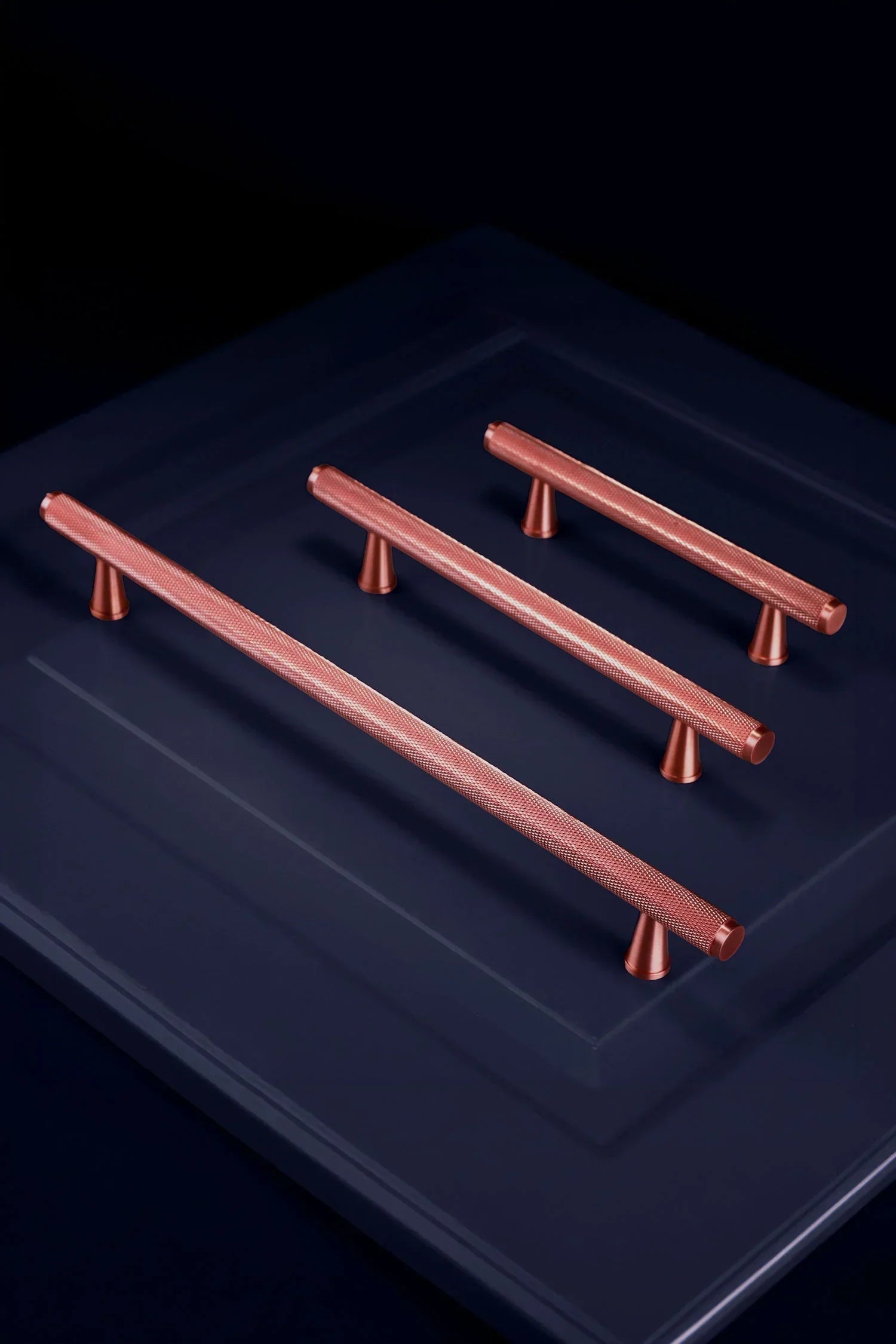
Our current satin brass programme runs through the Belgravia Hexagonal Bar Pull in Satin Brass and the Chelsea Knurled Bar Pull in Satin Brass — both machined from solid brass and finished with the brushed satin that defines the current American default.
How to choose — five scenarios
The choice is rarely a matter of taste alone. A few scenarios where one finish tends to win over the other :
- A traditional or English-country kitchen — polished brass, unlacquered, allowed to age. The patina is the point.
- A modern American kitchen with white or off-white cabinetry — satin brass. Polished can read jewellery-like against pale paint; satin sits calmer.
- A north-facing kitchen with cool daylight — polished brass, which throws warmth into the room; satin can read grey-gold in cold light.
- A south-facing kitchen with warm afternoon sun — satin brass, which softens the light; polished can flare in strong sun.
- A working family kitchen with young children — satin, unhesitatingly. The fingerprint economics are decisive.
Mixing them
The rule that a kitchen must commit to one finish has quietly loosened over the past three or four years. Designers now mix polished and satin in the same run, and the effect — when it works — is considered rather than confused. Polished brass on the knobs, satin brass on the bar pulls beneath, is one pairing that reads especially well in a Shaker kitchen. Satin knobs on the doors and a single polished piece on the pantry — the show door — is another.
The rule for mixing is that both finishes must be the same underlying brass. Cool satin nickel does not sit next to warm polished brass; both need to belong to the same yellow family. When the base tone matches, the two finishes read as intended.
Frequently asked questions
Is polished brass or satin brass more current in US kitchens?
Satin brass is the current default in newly designed American kitchens — it has been the dominant finish since roughly 2020, and remains so. Polished brass has an older, more traditional following and is used in kitchens that lean historic or English-country. Both are current; neither is dated.
Does polished brass tarnish?
Unlacquered polished brass patinas rather than tarnishes — the mirror finish softens over years of use into a warmer, more human tone. Lacquered polished brass does not patina and stays uniformly bright. Our solid brass pieces ship unlacquered by default, on the view that the patina is part of the appeal.
Which finish shows fingerprints more?
Polished brass shows fingerprints; satin brass hides them. A high-polish surface reflects, and fingerprints break the reflection. Satin brass is textured, so the same fingerprints disappear into the matte surface. This is often the deciding factor in a family kitchen.
Can I mix polished and satin brass in one kitchen?
Yes, and it is now common in considered kitchens. The most reliable pairing is polished knobs on cabinet doors and satin bar pulls on drawers — the mix reads as intentional. The rule is that both finishes must sit in the same warm yellow family; do not mix satin nickel or chrome with polished brass in the same run.
✦
Explore the full brass cabinet knobs collection — polished and satin, cast and machined, in the finishes that suit both a traditional and a modern American kitchen.