

The Journal · Buying Guide
Schrankgriffe vs. Schrankknöpfe: Ein britischer Leitfaden zur Auswahl der richtigen Beschläge
Griffe oder Knöpfe? Ein praktischer UK-Leitfaden zur Auswahl von Schrankbeschlägen – nach Raum, nach Schubladengröße, nach Stil. Mit Größenregeln und passenden Oberflächen.
Es gibt in jedem Küchenbau diesen ruhigen Moment, in dem die Schränke eingebaut sind, der Anstrich getrocknet ist und nur noch die Griffe fehlen. Dann stellt sich die Frage: Knöpfe oder Griffe? Es scheint eine Kleinigkeit zu sein. Ist es aber nicht. Beschläge sind der einzige Teil einer Küche, den man jeden Tag berührt, und die Wahl prägt, wie ein Raum wirkt – formell oder entspannt, traditionell oder modern, verspielt oder schlicht.
Das ist der Leitfaden, den wir uns gewünscht hätten, als wir zum ersten Mal eine Küche einrichteten. Wir fertigen und verkaufen beides, haben also keine Präferenz. Die ehrliche Antwort ist „es kommt darauf an“, und worauf es ankommt, sind hauptsächlich Ihre Schubladengrößen, Ihr Türlayout und der gewünschte Look. Gehen wir es durch.
Die kurze Antwort
Wenn Sie eine Faustregel wollen, dann diese: Knöpfe an Türen, Griffe an Schubladen. Das funktioniert in den meisten Küchen, die meiste Zeit, und so haben es britische Tischler seit zwei Jahrhunderten gemacht. Der Grund ist mechanisch, nicht stilistisch – eine Schublade benötigt zwei Griffpunkte, um sie gerade herauszuziehen, besonders wenn sie beladen ist. Eine Tür schwingt nur an einem Scharnier, daher ist ein Griffpunkt ausreichend. Ein Knopf erfüllt den Zweck; ein Griff wäre daran verschwendet.
Das ist die Grundlage. Nun wird es interessant.
Wann man Griffe an Türen anbringen sollte
Es gibt drei gute Gründe, die Regel zu brechen:
1. Die Türen sind hoch. An einer raumhohen Speisekammer-Tür oder einem Kleiderschrank wirkt ein einzelner Knopf in der Mitte verloren. Ein vertikaler Griff, der etwa ein Drittel der Türhöhe misst, bietet dem Auge einen Anhaltspunkt und der Hand einen Griffpunkt. Der Griff sollte etwa ein Drittel von oben beginnen.
2. Die Küche ist modern, schlicht oder grifflos-ähnlich. Shaker- und Georgianische Türen tragen Knöpfe wunderschön, weil die Mittelstrebe dem Knopf einen Rahmen gibt. Eine flache Front hat nichts, um einen Knopf zu rahmen, und ein kleiner runder Punkt, der auf einer großen Farbfläche schwebt, sieht zufällig aus. Ein langer, schlanker Griff stellt die Geometrie wieder her.
3. Sie möchten, dass jede Tür wie die Schubladen darunter aussieht. Dies ist der „All-Griffe“-Look. Er ist ruhiger als ein gemischtes Schema – weniger Formen, die um Aufmerksamkeit konkurrieren – und er funktioniert besonders gut in tonalen Küchen (dunkle Grüntöne, Cremeweiß, tiefere Blautöne), wo die Beschläge als dünne Metalllinie und nicht als Satzzeichen gedacht sind.
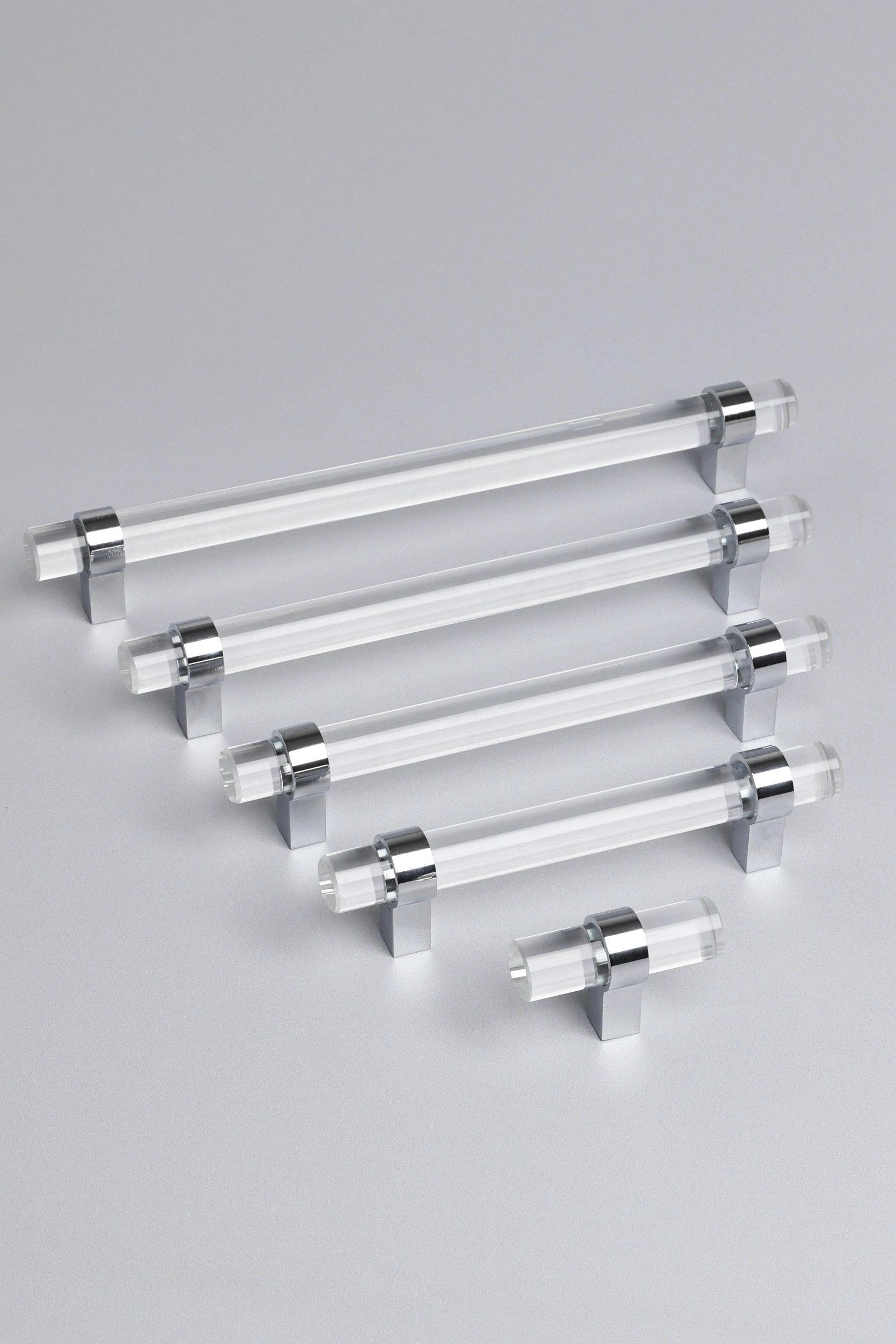
Wenn Sie einen dieser drei Punkte umsetzen möchten, sind Griffe an Türen die richtige Wahl. Wir bieten mehrere Linien an, die dafür konzipiert sind – sehen Sie sich unsere Kollektion Schrankgriffe & -riegel für die langen, schlanken Stangengriffe in passenden Oberflächen an.
Wann man Knöpfe an Schubladen anbringen sollte
Dieselbe Logik, umgekehrt. Zwei gute Gründe, "Griffe an Schubladen" zu brechen:
1. Die Schublade ist schmal. Alles unter 300 mm (ca. 12 Zoll) Breite – eine Besteckschublade, eine Gewürzschublade – lässt sich gut mit einem einzigen zentralen Knopf handhaben. Ein Griff an etwas so Schmalem sieht aus, als wäre er gestreckt, um zu passen. Zwei Knöpfe an einer schmalen Schublade sind das gleiche Problem, nur verdoppelt.
2. Die Küche ist im Landhaus-, Cottage- oder Shaker-Stil gehalten. In einer traditionellen englischen Küche mit lackierten Shaker-Türen und sichtbaren, klobigen Schubladen haben durchgängig Knöpfe einen besonderen Charme. Es wirkt handgemacht. Es ist der Look einer Plain English oder deVOL Küche, und es ist eine absolut gute Antwort, wenn Ihre Schubladen nicht riesig sind.
Die Grenze liegt wieder bei ungefähr 300 mm. Darüber hinaus wirkt ein einzelner Knopf in der Mitte zu klein, und eine beladene Schublade zieht sich ungleichmäßig, weil der Benutzer zum Ausgleich außermittig greift.
Größenanpassung – der Teil, den niemand richtig erklärt
Die Größenanpassung von Beschlägen ist meist intuitiv, wenn man die Proportionen kennt, aber hier sind die Zahlen, die wir bei der Küchenplanung verwenden.
Knöpfe:
- Schranktüren (Standardhöhe 700–900 mm): 32-mm-Knopf (die Standardgröße).
- Größere Vorrats-/Speisetüren: 38-mm-Knopf – verleiht der Tür etwas mehr Gewicht.
- Kleine Badezimmer- oder Kleiderschranktüren: 30 mm oder sogar 25 mm – aber nur bei kleinen Schreinerarbeiten. An einer normalen Küchentür wirkt dies zu zierlich.
Ein 32-mm-Knopf hat ungefähr die Größe einer £2-Münze. Ein 38-mm-Knopf ist auf seiner längsten Achse eher eine 50p-Münze. Wenn möglich, machen Sie den £2-Münzen-Test an der Tür selbst, bevor Sie bestellen – kleben Sie eine Münze an die Stelle, wo der Knopf sitzen soll, treten Sie zwei Meter zurück und prüfen Sie, ob es wirkt.
Griffe – nach Schubladenbreite:
- Bis 450 mm breit: 96 mm Mitte-zu-Mitte (das "c/c"-Maß ist Loch-zu-Loch, nicht Gesamtlänge).
- 450–600 mm breit: 128 mm c/c.
- 600–800 mm breit: 160 mm c/c.
- 800–1000 mm breit: 192 mm c/c.
- 1000 mm+ breit: 224 mm c/c, oder zwei 160 mm Griffe nebeneinander.
Diese Werte sind nicht absolut – leichte Abweichungen nach oben oder unten sind in Ordnung –, aber sie sind ein sinnvoller Ausgangspunkt. Der Fehler, den die meisten Leute machen, ist, zu klein zu wählen. Ein 96-mm-Griff an einer 700-mm-Schublade wirkt wie ein nachträglicher Gedanke. Nehmen Sie fast immer die nächste Größe.
Griffe – vertikal an hohen Türen:
Faustregel: Der Griff sollte etwa ein Drittel der Türhöhe betragen. An einer 1900 mm hohen Speisekammer-Tür ist ein 600 mm oder 700 mm Griff passend; ein 320 mm Griff würde verloren wirken. Beginnen Sie ihn etwa 100 mm von der Oberkante der Tür.
Oberfläche und Ton – das richtige Metall finden
Hier sehen wir die teuersten Fehler. Die von Ihnen gewählte Beschlag-Oberfläche prägt den gesamten Raum, daher lohnt es sich, darüber nachzudenken, bevor Sie sich für Armaturen, Beleuchtung und andere Eisenwaren entschieden haben.
Polierte, unlackierte Messingbeschläge leben. Sie dunkeln nach, zeigen Spuren, wo Hände sie berühren, und entwickeln über Jahre hinweg eine weiche Patina. Wenn Sie einen Plain English / deVOL / englischen Landhausstil wünschen, ist dies die Oberfläche. Sie patiniert gleichmäßig. Sie ist nichts für Leute, die sich über einen Fingerabdruck ärgern würden.
Antikes Messing ist eine dunklere, tiefere Oberfläche – bereits auf halbem Weg der Alterungskurve. Es wirkt wärmer als poliertes Messing und passt wunderschön zu tiefen Grüntönen, Navy und Nussbaum.
Satiniertes Messing (lackiert) ist die vernünftige Mitte. Es sieht aus wie Messing, behält seine Farbe, muss nicht poliert werden. Gut für Mietküchen, Familienhaushalte, überall dort, wo Sie sich keine Gedanken darüber machen wollen.
Chrom und Nickel sind kühlere Töne – sie passen gut in moderne, minimalistischere Küchen oder zu grauen Schränken. Sie eignen sich auch für Badezimmer, in denen die Armaturen verchromt sind.
Schwarz (matt, satiniert oder geölt) ist momentan sehr beliebt, besonders in modernen Landhausküchen. Es ist die kontrastreichste Oberfläche – stark gegen weiße oder hellgrüne Schränke, fast unsichtbar gegen dunkelgrüne oder schwarze.
Eine allgemeine Regel: Wählen Sie entweder ein warmes Metall (Messingfamilie) oder ein kühles Metall (Chrom, Nickel, Schwarz), und lassen Sie Ihre Armaturen, Beleuchtung und Schalter folgen. Gemischte Metalle können funktionieren, aber es ist eine fortgeschrittene Wahl – Sie brauchen einen starken Grund und einen konsistenten Rhythmus. Im Zweifelsfall bleiben Sie monogam.
Die vollständige Auswahl finden Sie in unserer Kollektion Türknäufe und Kollektion Schrankknäufe. Wenn Sie sich bei der Oberfläche unsicher sind, bestellen Sie ein Muster von jedem – das Metall eine Woche lang an Ihrer gestrichenen Tür zu sehen, beantwortet die Frage besser als jedes Foto.
Knöpfe und Griffe mischen – ja, aber mit einer Regel
Es ist völlig in Ordnung, beides in einer Küche zu verwenden. Tatsächlich tun das die meisten Küchen, die wir besuchen. Die Regel lautet: gleiche Familie, gleiche Oberfläche.
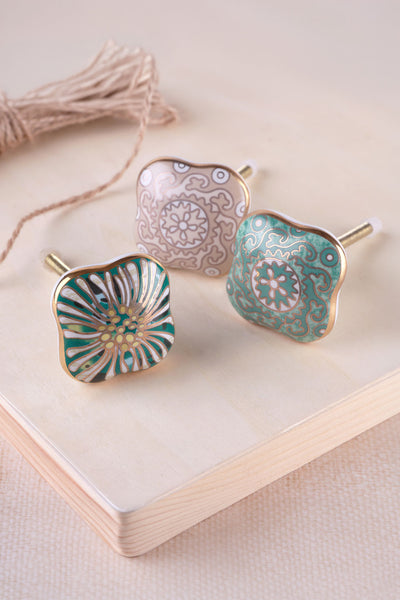
Wenn Sie keramische Knöpfe in Creme gewählt haben, sollten Ihre Schubladengriffe aus derselben Farbfamilie stammen. Die Entwicklung einer Beschlagserie ist zum Teil die Arbeit, sicherzustellen, dass Knopf und Griff aus derselben Werkstatt stammen – gleiche Sprache, gleiche Proportionen, gleiche Patina. Mischen Sie einen zarten, handbemalten Keramikknopf mit einem brutalistischen, mattschwarzen Stangengriff, und Sie werden die Dissonanz jedes Mal spüren, wenn Sie kochen.
Die Ausnahme sind Inseln. Eine Insel wird oft als separates Möbelstück behandelt – ein Küchentisch, der zufällig Schubladen hat. Hier ist es legitim, leicht unterschiedliche Beschläge in derselben Ausführung, aber einer anderen Silhouette zu verwenden. Wir sehen, dass Kunden dies oft tun, und es funktioniert.
Platzierung – wo die Beschläge tatsächlich hingehören
Die richtige Platzierung von Schrankbeschlägen ist der Teil, den jeder für offensichtlich hält und dann falsch macht. Hier sind einige Hinweise:
Knäufe an Türen:
- Platzieren Sie den Knauf etwa 65–75 mm von der Ecke der Tür entfernt (auf der Schwingseite, nicht auf der Scharnierseite).
- Vertikale Position: Etwa ein Drittel von oben ist traditionell; einige Schreiner gehen mittig. Beides ist in Ordnung; wählen Sie eine Variante und bleiben Sie dabei.
- Bei einem Vitrinenschrank mit Glasfront ist die Knaufplatzierung oft mittig horizontal aus Symmetriegründen.
Griffe an Schubladen:
- Zentrieren Sie den Griff horizontal auf der Schubladenfront.
- Vertikale Position: mittig von oben nach unten bei den meisten Schubladen. Bei sehr tiefen Auszügen (200 mm+ hoch) bevorzugen einige die Platzierung des Griffs im oberen Drittel – das sorgt für einen besseren Handgelenkwinkel, wenn die Schublade schwer ist.
Eine Kleinigkeit: Vorbohren. Halten Sie die Beschläge mit Kreppband fest, öffnen und schließen Sie die Tür ein paar Mal, sehen Sie, wie Ihre Hand fällt. Die richtige Platzierung ist die, die Ihre Hand findet, ohne nachzudenken.
Ein Hinweis zu massivem Messing vs. plattiertem Messing
Hochwertige Schrankbeschläge sind sandgegossenes massives Messing – das Metall ist durch und durch Messing, sodass es beim Verschleiß an den Kanten die gleiche Farbe behält. Günstigere Beschläge sind in der Regel plattiert, d. h. eine dünne Messingschicht über Zink oder Zinn. Plattierte Oberflächen werden an den Kanten innerhalb weniger Jahre bei täglichem Gebrauch silbern, was der verräterische Hinweis ist.
Der Preisunterschied ist erheblich – massives Messing kostet mehr –, aber bei etwas, das man täglich berührt, in einer Küche, die man fünfzehn Jahre lang behalten wird, rechnet sich das. Ein für 15 £ beschichteter Knopf, der alle drei Jahre ersetzt wird, ist teurer als ein massiver Messingknopf für 45 £, der den Schrank überdauert.
Fünf häufige Fehler (und die Lösung für jeden)
Zu klein wählen. Ein 32-mm-Knopf ist bei den meisten Schranktüren korrekt, wirkt aber bei raumhohen Speisekammer-Türen unterdimensioniert. Eine Nummer größer wählen.
Stile innerhalb eines Finishs mischen. Moderne Stangengriffe plus traditionelle Keramikknöpfe im selben Messing: unharmonisch. Wählen Sie eine Familie.
Türstärke bei der Bestellung vergessen. Knäufe verwenden ein Standard-M4-Gewinde und Griffe M4-Schrauben – beide sind standardmäßig lang genug für 18 mm dicke Türen. Wenn Ihre Türen dicker sind (einige Maßküchen gehen bis 22 mm), benötigen Sie längere Schrauben. Fragen Sie vor der Bestellung nach.
Griffe zu klein für die Schublade. Verwenden Sie die obige Größentabelle; im Zweifelsfall lieber größer.
Kauf vor dem Anstrich. Messing auf Cremeweiß wirkt völlig anders als Messing auf Tiefgrün. Bestellen Sie Muster, sobald die Schränke gestrichen sind, nicht vorher.
Also – Knöpfe oder Griffe?
Die schnellste Antwort: Knöpfe an Türen, Griffe an Schubladen, bemessen auf etwa ein Drittel der Türhöhe (für hohe Türen) oder nach der c/c-Tabelle oben (für Schubladen). Eine Metallfamilie. Massives Messing, wenn die Küche dauerhaft bleiben soll.
Wenn Sie mehr über die Auswahl von Beschlägen lesen möchten, behandelt unser vollständiger UK-Leitfaden zur Auswahl von Türknäufen interne Türbeschläge ausführlicher. Und wenn Sie eine Küche als Ganzes gestalten, ist Die Küche im ersten Licht eine kurze Lektüre darüber, wie sich eine Küche morgens einfügt.
Weitere Lektüre
- So wählen Sie Schrankknäufe aus: Ein vollständiger UK-Leitfaden – Material, Oberfläche, Größe, Platzierung – die kleinen Details, die eine Küche von „eingebaut“ zu „gestaltet“ werden lassen.
- Schrankbeschläge: Das Detail, das eine Küche definiert – Warum Designer die Schrankbeschläge vor den Schränken selbst spezifizieren.
- So wählen Sie Messingoberflächen aus: Ein Materialleitfaden – Natur, antik, poliert und Bienenwachs – ein kurzer Leitfaden zu den Messingoberflächen, mit denen wir arbeiten.