

The Journal · Buying Guide
The Ultimate Guide to Dinner Candles
A dinner table without candles is a place where people eat. A dinner table with candles is an occasion. Our complete guide covers types, colour, holders, occasion-by-occasion styling, and how to burn them properly — from tapers to twists to hand-rolled beeswax.
A dinner table without candles is a place where people eat. A dinner table with candles is an occasion. No other single decorative choice does more to lift a meal — from the morning light of a leisurely breakfast to the held-breath dimness of a winter dinner — than the right pair of dinner candles in the right pair of holders.
This guide is everything we’ve learned at G Decor about choosing them, styling them, burning them, and replacing them — from the practicalities of wax and wick to the small theatrics of a Christmas tablescape.
The anatomy of a dinner candle
Dinner candles (also called taper candles, dining candles, or simply tapers) are the long, slim candles designed to sit upright in a holder. Most are between 7 and 14 inches tall and roughly 7/8 inch (22 mm) in diameter at the base — the standard size that fits virtually every candle holder you’ll buy.
A good dinner candle has three things working together:
- A consistent diameter — so it sits stable in any standard holder without wobble.
- A high-quality wick — cotton or wood, properly centred, that burns cleanly without smoking or guttering.
- Clean wax — usually soy, beeswax, paraffin, or a blend. Soy and beeswax burn longer, cleaner, and produce less soot than cheap paraffin.
At G Decor, our dinner candles are hand-finished from soy wax in small batches. The hand-finishing is the bit that matters: each candle is dipped, hand-rolled or hand-painted, so no two are exactly identical. That irregularity is the difference between a candle that looks like a household commodity and one that looks like it belongs on a table.
Types of dinner candles
Straight tapers
The classic. Slim, smooth-sided, available in every colour. Reads as formal and ageless — appropriate everywhere from a black-tie wedding to an everyday weeknight supper.
Twisted tapers
Twisted (or spiral, or rope) tapers add visual interest without adding any other styling work. They’re forgiving — they look considered even when grouped randomly, and they pair as well with modern flatware as with antique silver. A twist of unexpected colour (mustard, terracotta, deep plum) makes a tablescape feel current.
Rolled beeswax
Hand-rolled beeswax candles have a textured, honeyed surface and warm amber colour. They’re the most traditional — beeswax candles have been used on British tables for centuries. They smell faintly of honey when lit and burn very cleanly.
Hand-dipped & hand-painted
Hand-dipped candles have subtle variation in diameter from base to tip, which reads as natural and unfinished in the right way. Hand-painted designs — checkered, striped, gradient — turn the candle itself into a centrepiece.
Browse our full range across Dinner Candles, Pillar Candles and All Candles — including hand-rolled, twisted, and hand-painted designs.
Choosing colour
Colour does the heaviest lifting in a tablescape, and dinner candles are the easiest place to introduce a colour story. A few rules of thumb:
- For all-white china + linen: cream, ivory, butter or pale taupe candles. Anything more saturated will feel costume-y.
- For coloured or patterned china: pull one colour from the pattern and use it for the candles. The repetition reads as intentional.
- For dark or formal settings: ivory, gold-bronze, or burgundy candles. Avoid white — too sterile.
- For weddings: ivory or white as the default; soft sage, blush, or champagne for spring/summer; deep red or evergreen for winter.
- For Christmas tablescapes: red and gold are traditional. Deep green, brass-toned, or even pearl-white candles read more contemporary. See our Christmas collection for seasonal options.
When in doubt, two colours per table — ivory plus one accent — is almost always more elegant than three or four.
Choosing the holder
The candle holder is half the visual story. A few options:
Solid brass holders are the most versatile — they read traditional with antique china and modern against minimalist plates. Brass holders age beautifully and become heirlooms. Browse our candle holders collection.
Glass and crystal holders catch and refract candlelight, which is unbeatable for evening dinners. They read formal and add sparkle.
Ceramic holders add weight and softness. Best for relaxed dinner parties, country tables, and rustic settings.
Weighted base holders are essential if you have pets, children, or a busy hostess — they don’t tip over when a tablecloth gets pulled.
A pair of holders is the minimum for a table for four; a row of three or five matched holders down the centre of a long table is a more dramatic move.
By occasion
The dinner party
Two candles per four guests, in matched holders, placed off-centre rather than directly between place settings (so guests can see each other across the table). Light them 20 minutes before guests arrive — long enough for the wax to start pooling and the flame to settle, but not so long they’ve burned down.
The wedding
Pair candles to the wedding palette. For long tables, run a row of 5–7 holders down the centre with low floral arrangements between. For round tables, three holders in a triangle at the centre, with a low arrangement of flowers and small votives surrounding. Always test burn time at least one full candle before the day — you want to know how long your chosen candles will last in the venue’s airflow.
Christmas
Red, gold, evergreen, or deep burgundy. Pair with brass holders and seasonal greenery (eucalyptus, holly, fir sprigs). For a Scandinavian-minimal Christmas, plain ivory tapers in glass or matte brass.
Easter & spring
Pastel candles — soft yellow, dusky pink, sage green — in glass holders, with small spring flowers or moss. Lighter, looser styling than winter.
Everyday evenings
Even for an ordinary Tuesday supper, two ivory candles in any holder transforms the dinner table. The smallest version of tablescaping.
How to burn dinner candles properly
A few rules that significantly extend candle life and improve how they burn:
- First burn matters. Burn a new candle for at least one hour the first time so the wax pool reaches the edges of the candle. Memory wax is real — if a candle tunnels on its first burn, it will tunnel forever.
- Trim the wick before every lighting. Use scissors or a wick trimmer to keep the wick at 5–7 mm. Long wicks cause smoking, soot, and uneven burning.
- Don’t burn for more than 4 hours at a time. After 4 hours, snuff and let the candle cool. Burning longer causes the holder to overheat and the candle to lean.
- Burn away from drafts. Open windows, AC vents, and even passing foot traffic cause candles to gutter (drip down the side) and burn unevenly.
- Snuff, don’t blow. Snuffing prevents wax spatter and the burned-wick smoke smell. A small brass snuffer is a worthy investment.
- Store cool and flat. Dinner candles are heat-sensitive — never store them on a windowsill in summer or above a radiator in winter. Lying flat in a drawer is ideal.
How to extend burn time
A standard 10-inch soy dinner candle burns for 6–8 hours total — usually two or three dinner parties. To make yours go further:
- Refrigerate before lighting. An hour in the fridge slows the wax melting rate. Don’t freeze — that can crack the wax.
- Wrap the base in foil if it doesn’t fit snugly in the holder. A loose candle wastes wax through wobble-melting.
- Keep the wick centred as it burns. If the flame leans, gently nudge the wick back upright with a wick dipper.
Frequently asked questions
How long does a dinner candle burn?
A standard 10-inch hand-finished soy taper burns for 6–8 hours total. Beeswax burns slightly longer; cheap paraffin burns faster.
Are dinner candles safe with children and pets?
Yes, with the same precautions as any open flame: weighted holders, no overhanging tablecloths, never leave unattended. For households with small children, glass hurricane holders that fully enclose the flame are a worthwhile upgrade.
Why do my candles drip down the side?
Usually one of three reasons: a draft, an off-centre wick, or a candle that doesn’t fit snugly in its holder. Test for each.
Can I burn dinner candles outdoors?
Only in an enclosed lantern. Outdoor airflow will cause guttering, wax loss, and very short burn time.
What’s the difference between dinner candles and taper candles?
They’re the same thing. “Dinner candle” is the slightly more British, slightly more formal name; “taper” is the term you’ll see in American sources. Both refer to the long, slim, holder-mounted candle used on dinner tables.
Should I match candles to napkins or to flowers?
Whichever has the more saturated colour. Candles are a secondary colour element — they should support the dominant colour, not compete with it.
Building the rest of the table
A dinner candle is the start of a tablescape, not the whole of it. Complete the table with:
- Candle Holders in matching or complementary materials
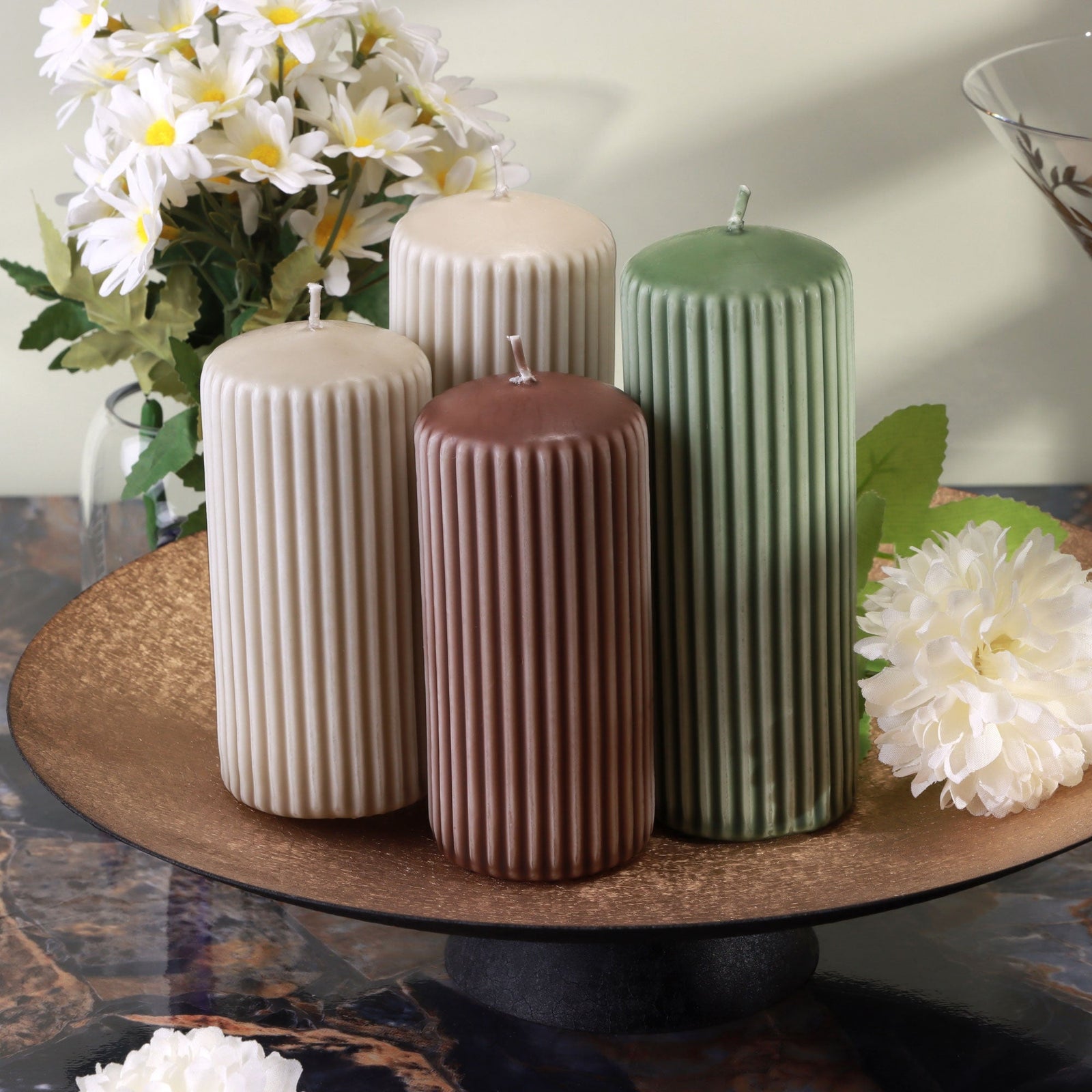
- Pillar Candles for sideboards and serving stations
- Glassware — wine glasses, tumblers, cocktail glasses for the full setting
- Serveware and Dinnerware for plates, bowls and serving vessels
- Table Accessories — napkin rings, salt cellars, place card holders
Browse the full G Decor candles collection for everything from dinner candles to scented home fragrance. Designed in England, hand-finished in small batches, Made in Britain certified.
Further reading
- A British Summer Table — Long lunches, hand-blown glass, and the way summer asks to be set.
- Fragrance Families to Know for the Home — The candle you light in winter shouldn't be the one you light in spring. Seven fragrance families.
- The Drinks Tray at Twilight — A small ceremony at the end of the day — on glassware, low light, and the cocktail hour at home.