

The Journal · British Design
Setting a Considered Table: Ceramic, Glass and the Quiet Art of Hosting
A designer's guide to setting a considered table — how ceramic, glass and linen come together in one quiet palette for calmer, more confident hosting.
What is it that makes one table look considered and another merely set? Not the number of pieces, nor the gloss of the china, but the sense that every object has been chosen rather than gathered. A considered table is, almost always, a table that has been edited — ceramic, glass and linen brought into one quiet conversation.
What a considered table actually means
There is a particular kind of table that stops you at the doorway. Not because it is grand — grandeur is easy, and usually expensive — but because it reads as whole. The plates speak to the glasses. The candle belongs to the room it sits in. Nothing competes; nothing apologises. This is the considered table, and it is far more about restraint than abundance.
Most of us host the way we pack for a holiday: more than we need, in case. An extra set of glasses, a charger plate we are not sure about, three candles where one would do. The considered table works in the opposite direction. It begins with a small, good collection of tableware and asks each piece to earn its place. The result is a table that looks designed rather than assembled, and — quietly — a great deal easier to lay.
This is a guide to building that table, piece by piece: the ceramic, the glass, the linen and the small details that hold it all together.
Start with the ceramic
Ceramic is the foundation of any table, because it is what the eye lands on first and the hand touches most. A considered table tends to be built from a small number of ceramic forms used repeatedly, rather than a wide and mismatched cupboard pulled out only at Christmas.
Choose a palette, not a pattern
The mistake most tables make is collecting patterns — one floral set here, a striped set there, a souvenir bowl that never quite belongs. A considered table instead chooses a palette and holds to it. Teal and natural stoneware. Chalk white with a single hand-painted edge. Sea blue against warm brass. When the ceramic shares a temperature, you can mix forms freely — a hand-thrown bowl beside a smooth dinner plate — and the table still reads as one thought.
Hand-finished pieces such as the Canvara stoneware plates and bowls earn their place precisely because they are not identical. The slight variation from one piece to the next is what stops a table looking like a showroom and starts it looking like a home. Browse the wider dinnerware edit and choose by the colour already living in your kitchen rather than against it.
Buy for the meals you actually serve
A considered table is a functional one. If your hosting is long lunches and shared plates, a generous serving bowl and broad pasta plates will work harder than a formal twelve-piece service. If it is supper for two most nights, two beautiful plates used daily beat a boxed set kept for best. Choose the tableware that suits the way you eat, and it will be used — which is the only test that matters.
The glassware that earns its place
If ceramic is the foundation, glass is the light. A good glass catches candlelight and window light and lifts the whole table without trying. It is also where many tables quietly fall down — a jumble of promotional pint glasses, a lone survivor from a wedding set, something cloudy from the dishwasher.
The considered approach is to own fewer glasses, but ones worth pouring into. A set of hammered or bubble-textured pieces, such as the iridescent grey hammered wine glasses, does double duty: handsome enough for guests, robust enough for a Tuesday. Handmade glass carries small irregularities in the surface that scatter light beautifully, which is exactly what a flat machine-made glass cannot do.
Build in threes, not dozens
You rarely need a different glass for every drink. A wine glass that suits both red and white, a short tumbler for water and spirits, and a single elegant coupe or flute for the occasional toast will carry almost any evening. Explore the glassware edit and the dedicated wine glasses collection, and choose a single texture or tone to run through all three so the table holds together.
Let colour do the talking
Coloured and textured glass is one of the easiest ways to give a table character without adding clutter. A wash of smoke grey, a blush pink, a soft amber — picked up once across the glasses — does more for a table than any centrepiece. Choose the colour by season if you like: lighter, cooler tones through spring and summer, warmer ambers and greys as the evenings draw in.
Linen, light and the table's quiet structure
Ceramic and glass are the pieces people notice. Linen and light are what make the table feel finished. They are also the layers most often skipped, which is a shame, because they are where a table gains its softness.
A washed linen runner or a pair of generous napkins immediately calms a table — they absorb sound, soften the edges of hard ceramic, and give the eye somewhere to rest. Keep them in one or two tones that sit within your chosen palette rather than fighting it. A considered table rarely uses a busy printed cloth; it lets the ceramic and glass be the pattern, and keeps the textile quiet.
Light is the final structural layer. Daytime tables want nothing more than the window, but as the evening comes, candlelight is what turns a meal into an occasion. A pair of dinner candles in simple holders, or a low cluster of pieces from the candles edit, will warm a table in a way overhead lighting never can. Keep the flame below eye level so it lights faces rather than blinding them, and choose unscented candles at the table itself — fragrance belongs in the room, not in the food.
The small things that hold it together
A considered table is made in its details. The pieces that go almost unnoticed — the coaster under a glass, the salt dish, the small tray that gathers the clutter — are what separate a table that has been thought about from one that has merely been laid.
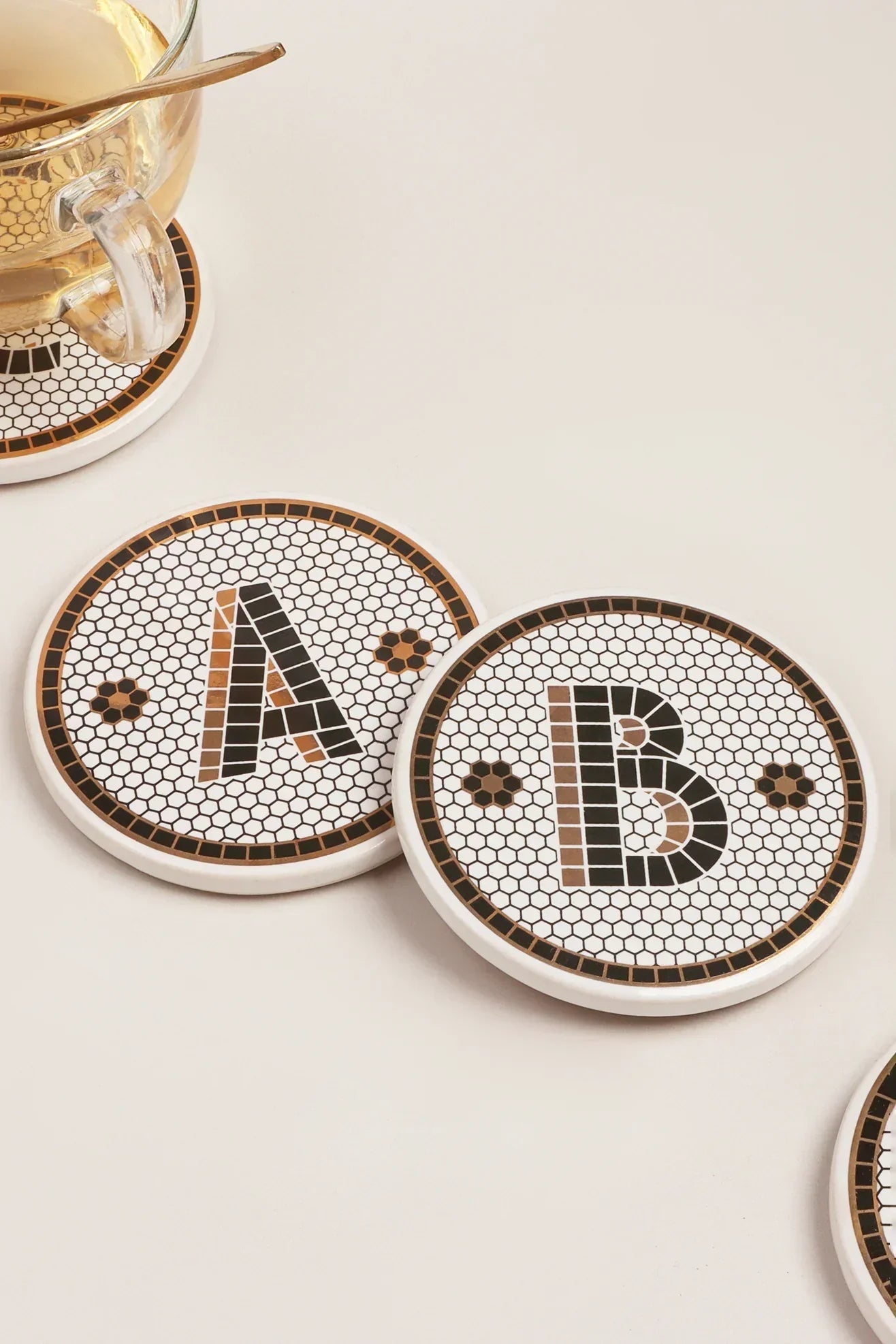
Coasters are a good example of a small piece doing quiet work. A set such as the British pub tile monogram coasters protects the table, yes, but it also signals care: a host who thought about where the glass would land. Personalised and monogrammed pieces add a further note of intention, the sense that this table belongs to this house and no other.
Beyond coasters, a small edit of table accessories — a salt and pepper set worth leaving out, a serving board, a jug that doubles as a vase — does more than any large centrepiece. The rule is the same as everywhere else on a considered table: each small thing should be useful, beautiful, or both. Anything that is neither belongs in a drawer.
The quiet art of hosting
The phrase matters: the quiet art of hosting. The best hosts are not the ones who exhaust themselves polishing chargers; they are the ones who have built a table they can lay in ten minutes because every piece already belongs together. Hosting becomes calm when the decisions have been made in advance.
This is the real argument for a considered table over a large one. When your tableware, glass and linen all share a palette, there is no deliberation on the night — you simply reach for what you own and it works. The mental energy you would have spent matching goes instead into the food, the conversation, and the company. A considered table is, in the end, a kind of hospitality you do once and benefit from for years.
Set for the people, not the photograph
A table laid for a magazine and a table laid for friends are different things. The considered table leans towards the second: enough space to put an elbow down, glasses within reach, serving dishes that go in the middle and stay there. Beauty that gets in the way of the meal is not beauty a host should keep.
Building a table that lasts
The considered table is built slowly. Rather than buying a complete service in one afternoon, the better approach is to add pieces that share a temperature and a quality, season by season, until you have a collection you genuinely reach for. Hand-finished ceramic and handmade glass age with a home rather than against it — small marks of use become part of the character rather than signs of wear.
Think in terms of selection and season rather than quantity. A lighter set of glasses and a paler linen for spring. Warmer ceramic tones and amber glass for autumn. A few home décor pieces — a single stem, a low bowl of fruit, a candle — to mark the time of year. The table changes gently with the calendar, but the foundation stays the same, and that consistency is exactly what makes it read as considered.
Frequently asked questions
What makes a table look considered rather than cluttered?
A shared palette and a small number of well-chosen pieces. When the ceramic, glass and linen all sit within one colour temperature, the table reads as a single thought even when the forms differ. Clutter comes from competing patterns and pieces that have no reason to be there — a considered table removes those and keeps only what is useful or beautiful.
How many place settings should I actually own?
Buy for the way you really eat. If you host long lunches and shared meals, generous serving pieces and broad plates work hardest; if it is mostly supper for two, a small set of beautiful pieces used daily beats a large boxed service kept for best. Choose tableware you will reach for often rather than store away.
Do my plates and glasses need to match?
They need to belong, not match. Mixing a hand-thrown bowl with a smooth dinner plate is fine — encouraged, even — as long as they share a palette. The same is true of glass: pick one texture or tone and run it across your wine glasses, tumblers and water glasses, and the table will hold together without being identical.
What is the easiest way to make a table feel finished?
Add linen and candlelight. A washed runner or a pair of generous napkins softens hard ceramic, and a pair of dinner candles below eye level turns an ordinary meal into an occasion. Both layers are quick to add and do more for the atmosphere than any large centrepiece.
How do I host without it feeling like hard work?
Build a considered table in advance so there are no decisions left for the night. When your tableware, glass and linen already share a palette, laying the table takes minutes and your energy goes into the food and the company instead. Hospitality is calmest when the matching has already been done.
A final thought
A considered table is not the most expensive one in the room, nor the most crowded. It is the one where ceramic, glass and linen have been brought into quiet agreement, and where every piece has been chosen because it belongs. Build it slowly, by palette and by season, and it will serve you for years of long lunches and unhurried suppers.
Begin with our tableware, glassware and dinnerware edits, and let the table grow one considered piece at a time. With more than 700 verified reviews on Trustpilot and over 2,000 store reviews on Judge.me, our pieces are trusted in homes across the UK, US, Europe and Australia.