

The Journal · British Design
Christmas Hosting: A Considered Table
A designer's guide to Christmas hosting — the considered table built from candlelight, fluted glassware and quiet ceramic, laid the night before and lit as the guests arrive.
What do the Christmas tables you remember actually have in common? Rarely the food, oddly — it is the light, the weight of a glass in the hand, the sense that someone laid the table as though the evening mattered. Christmas hosting is the most forgiving kind there is: the mood arrives half-made. A considered table simply agrees to finish it.
A considered Christmas table starts with restraint
December is the season of too much, which is exactly why the memorable Christmas table does less. The instinct is to add — crackers, foliage, figurines, name cards, a runner, a second runner — until the table becomes a display shelf people happen to eat at. The considered approach inverts this: choose three elements to carry the evening — candlelight, glass and ceramic — and let everything else be surface and space.
Space is the ingredient hosts forget. Plates need room to land, elbows need room to exist, and a table with visible cloth or timber between the settings reads as generous rather than sparse. Before you add a single festive object, lay the places you actually need from the kitchen and dining collection and look at what remains. That remainder is your decorating allowance. It is smaller than the magazines suggest.
Candlelight first: the table's own weather
Christmas dinner is eaten in the dark — in Britain, gloriously so, with dusk arriving before four. This makes candlelight not an accent but the table's primary lighting, and it should be planned the way a designer plans a room's lamps. Tall dinner candles down the centre line give the vertical flames that make glassware and eyes glitter; keep them above or below sightline height so conversation crosses the table unimpeded.
Brass candle holders earn their keep here more than on any other night of the year: their warmth doubles the amber of the flame, and their weight keeps tall candles safe on a table that will be jostled by serving dishes and enthusiasm. Light them before anyone sits down — a table already glowing when guests enter says more about welcome than anything you could put on a place card.
Overhead lights, off
The one rule with no exceptions: the big light does not attend Christmas dinner. Candles on the table, a lamp glowing in the corner of the room, and nothing overhead. Every table looks better this way, and every guest does too.
Glassware that catches the season
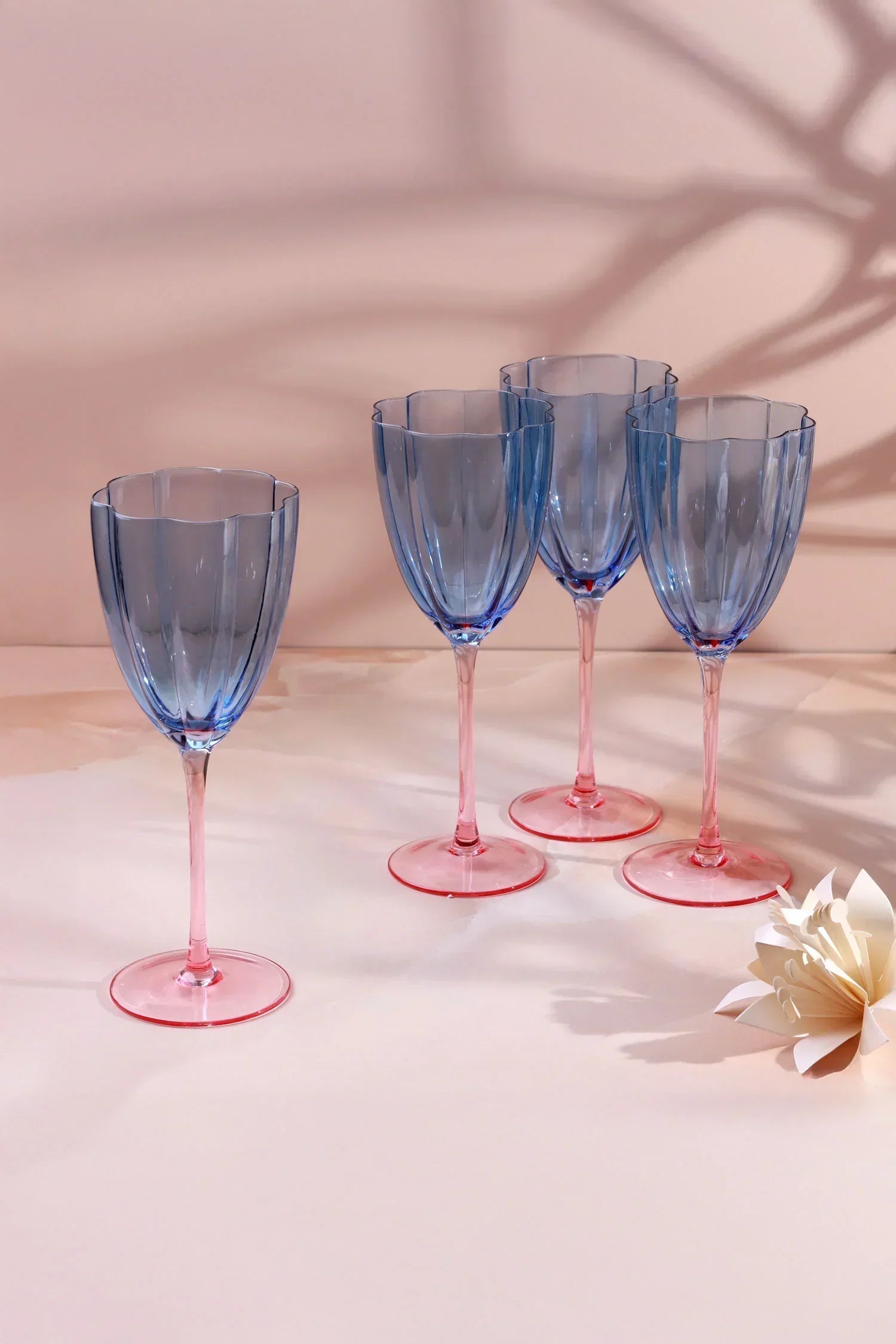
If candlelight is the weather, glass is what it falls on. Fluted and faceted glassware exists for winter tables: each ridge takes the flame and repeats it, so the light multiplies as it moves down the table. The Laurent tall-stem fluted wine glasses are the house example — the high stem lifts the bowl into the candlelight, and the fluting does the rest. Set one at every place even for guests who aren't drinking wine; a beautiful glass holds water with equal grace, and the table keeps its rhythm.
For a table that leans playful rather than formal, the Laurent glasses with pink and green stems bring colour in the one place it always works — at the rim of the setting, repeated identically down the table. Colour in the glassware means the linen and ceramic can stay quiet. Explore the wider wine glass collection with December in mind: the season favours stems, facets and a little theatre.
Ceramic, linen and the layered setting
The Christmas place setting wants depth rather than pattern: a charger or large plate beneath, the dinner plate above, linen folded simply at the side or on the plate itself. Hand-finished dinnerware with a little irregularity in the glaze does something interesting by candlelight that machine-perfect white cannot — the surface moves as the flames do.
Keep the palette to two notes plus the metal of your candle holders. Cream and green, white and walnut, slate and brass — Christmas red is optional and best deployed once, in the napkin or a ribbon, rather than everywhere. A table whose colours would look composed in July will look composed in December; tinsel logic is for the tree.
Linen, simply
Napkins want to be generous, pressed and simply folded — a rectangle on the plate or a soft knot beside it, never sculpture. If the table has a cloth, let it fall properly at the corners; if it is bare timber, let the wood be seen between the settings. Linen is the texture that makes candlelight feel soft rather than merely dim, and it asks for nothing in return but an iron the day before.
The centrepiece, solved quietly
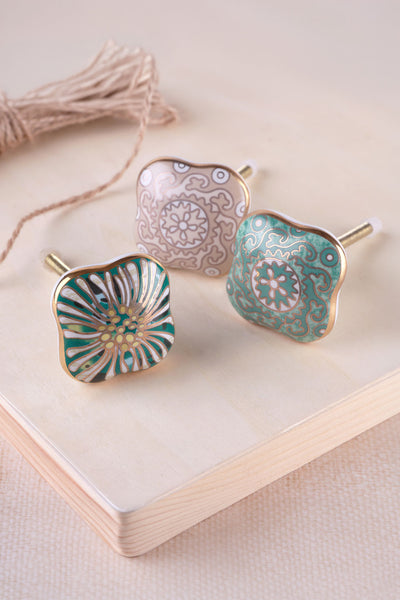
The centrepiece question produces more pre-Christmas anxiety than the turkey, and the answer is almost always: you already have it. A run of candles at varied heights, a loose line of foliage from the garden laid directly on the cloth, and perhaps a few small pieces from the table accessories collection spaced down the centre. Nothing tall, nothing that blocks a face, nothing that must be moved when the goose arrives.
The laid-foliage trick deserves its reputation. Eucalyptus, fir offcuts or holly placed straight on the table, threaded loosely between the candle holders, gives abundance without architecture — and it costs the garden, not the florist's diary, to achieve.
Set it the night before
The most practical Christmas hosting advice is calendrical: lay the table on Christmas Eve. Glasses polished, candles seated, linen folded, foliage down. Christmas morning has enough to carry, and a finished table waiting in the next room is a quiet reassurance every time you pass the door. It also gives you the one thing the day itself never offers — time to stand back, move a candlestick two inches, and get it right.
Then, when the moment comes: candles lit, overhead lights off, and the door opened. The table does the rest.
Frequently asked questions
How do I set a Christmas table that doesn't look cluttered?
Choose three carrying elements — typically candlelight, glassware and ceramic — and keep everything else minimal. Leave visible space between settings, keep the centrepiece low, and use at most two colours plus one metal. If an object neither holds food, drink nor flame, it must earn its place.
Should Christmas glassware match the dinnerware?
No — glassware and ceramic should complement rather than match. Let one carry the interest: coloured or fluted glass over quiet plates, or expressive plates with clear glass. Matching everything flattens the table; a considered contrast gives it depth.
How many candles does a Christmas table need?
For a table of six to eight, three to five dinner candles at staggered heights down the centre is right, supplemented by a lamp elsewhere in the room. More important than the number is the height: flames should sit above or below eye level so guests can see each other across the table.
When should I set the table for Christmas dinner?
Christmas Eve. Setting the table the night before removes the task from the busiest morning of the year, lets you adjust the arrangement calmly, and means the room is ready the moment the cooking demands your full attention.
How do I make a small table work for Christmas hosting?
Go vertical and go spare: tall slim candles rather than a wide centrepiece, foliage laid flat rather than arranged, serving dishes on a sideboard or console rather than the table itself. A small table fully laid but not crowded feels intimate — which is the mood the whole season is chasing.
A final thought
Christmas hosting is not a performance to survive but a table to sit down at — candlelight doing the lighting, fluted glass doing the sparkling, and enough space left for the only decoration that matters, which is the people around it. Begin with the glassware collection and build the considered Christmas table your Decembers will return to. With more than 700 verified reviews on Trustpilot and over 2,000 store reviews on Judge.me, our pieces are trusted in homes across the UK, US, Europe and Australia.