

The Journal · Brass
Brass Hardware Care: Patina, Polish, Patience
A craftsman's guide to brass hardware care — how to clean it, when to polish it, and why a little patina is the point, not the problem.
Should you polish brass back to a mirror, or let it find its own colour? It is the question every owner of solid brass hardware comes to eventually — usually a few months in, when the bright gold of a new knob has begun to deepen at the edges. Good brass hardware care starts with knowing which answer is yours.
Brass is a living material
Unlike chrome or nickel, brass does not stay still. It is an alloy of copper and zinc, and copper reacts gently with the air, with the oils on our hands, with the steam of a kitchen and the damp of a hallway. Over months and years it darkens, warms and softens. This is not a fault to be corrected; it is the reason designers reach for brass in the first place. A solid brass knob looks better at five years than at five weeks, and better still at fifteen.
That movement is what separates a considered, hand-finished piece from a mass-produced one. Across our Brassworks Edit, the brass is solid rather than plated, which means the colour you live with is the colour of the metal itself — not a thin coating waiting to wear through. Understanding what your brass is, and what it is doing, is the whole of brass hardware care.
Lacquered or living: know which you own
There are two broad families of brass, and they want different things from you.
Lacquered brass
Lacquered brass is sealed with a clear protective coat at the workshop. It holds its bright, even colour and resists fingerprints, which makes it a sensible choice for pieces handled constantly — a busy kitchen, a family bathroom. It asks for almost nothing: a wipe with a soft cloth. Crucially, you must never polish it, because metal polish will cut into the lacquer and leave a patchy, clouded surface that is far harder to put right than honest patina.
Unlacquered, or living, brass
Living brass is raw metal, left free to age. This is the brass that develops the deep, characterful patina collectors prize. It is the right choice for anyone who wants their door furniture and cabinet hardware to gather a story rather than stay frozen. If you are unsure which you have, a small test tells you: rub an inconspicuous spot gently with a brass-impregnated cloth. If it brightens, the brass is living; if nothing happens, it is sealed.
What patina actually is
Patina is often mistaken for dirt, and the two could not be more different. Dirt sits on the surface — grease from cooking, dust, the grime of a hallway. Patina is a change in the metal itself, a soft mottling of golds and browns that no factory can fake convincingly. A well-aged brass cabinet knob reads as inherited rather than installed, and that quiet authority is precisely the effect a designer is after.
The practical implication is simple. Cleaning removes dirt and should be done regularly. Polishing removes patina and should be done rarely, if at all. Confusing the two is the most common mistake in brass hardware care — people reach for an abrasive polish when all a piece needed was a damp cloth.
Everyday care: the gentle routine
For both lacquered and living brass, the daily and weekly routine is the same, and it is mercifully light. Wipe pieces with a soft, dry or barely damp cloth to lift dust and fingerprints. In a kitchen, where airborne oils settle on everything, a cloth dampened with warm water and the smallest amount of mild washing-up liquid will cut through grease; dry immediately afterwards, because standing water is the one thing brass genuinely dislikes.
Avoid anything abrasive — no scouring pads, no cream cleaners, no all-purpose sprays containing ammonia or bleach, all of which can stain or strip. The pieces in our hardware collection are made to be handled daily, and this much care is all most of them will ever ask for. Hands, oddly, are part of the maintenance: the natural oils of regular use keep brass supple and even in tone, which is why the knob you touch every day often ages more beautifully than the one you don't.
When and how to polish
Polishing is a choice, not a chore, and it applies only to living brass. If you love a bright, golden finish and want to return a piece to its just-made glow, polish; if you prefer the deepening colour, simply don't. Neither is wrong.
When you do polish, work gently. Use a proper brass cloth or a small amount of quality brass polish on a soft cotton rag, work in the direction of any grain, and buff with a clean cloth afterwards. For knobs and handles, it is worth removing them from the door or drawer where practical, so polish doesn't touch surrounding paint or timber. Go lightly — you are coaxing colour back, not scrubbing. A single careful pass twice a year keeps living brass bright; anything more frequent is rarely needed and slowly wears the surface.
Antiqued and hand-finished brass
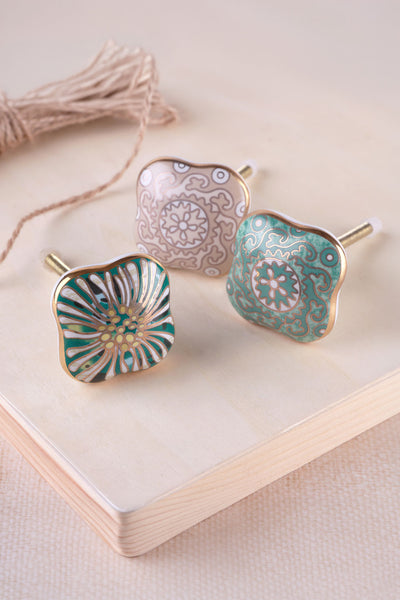
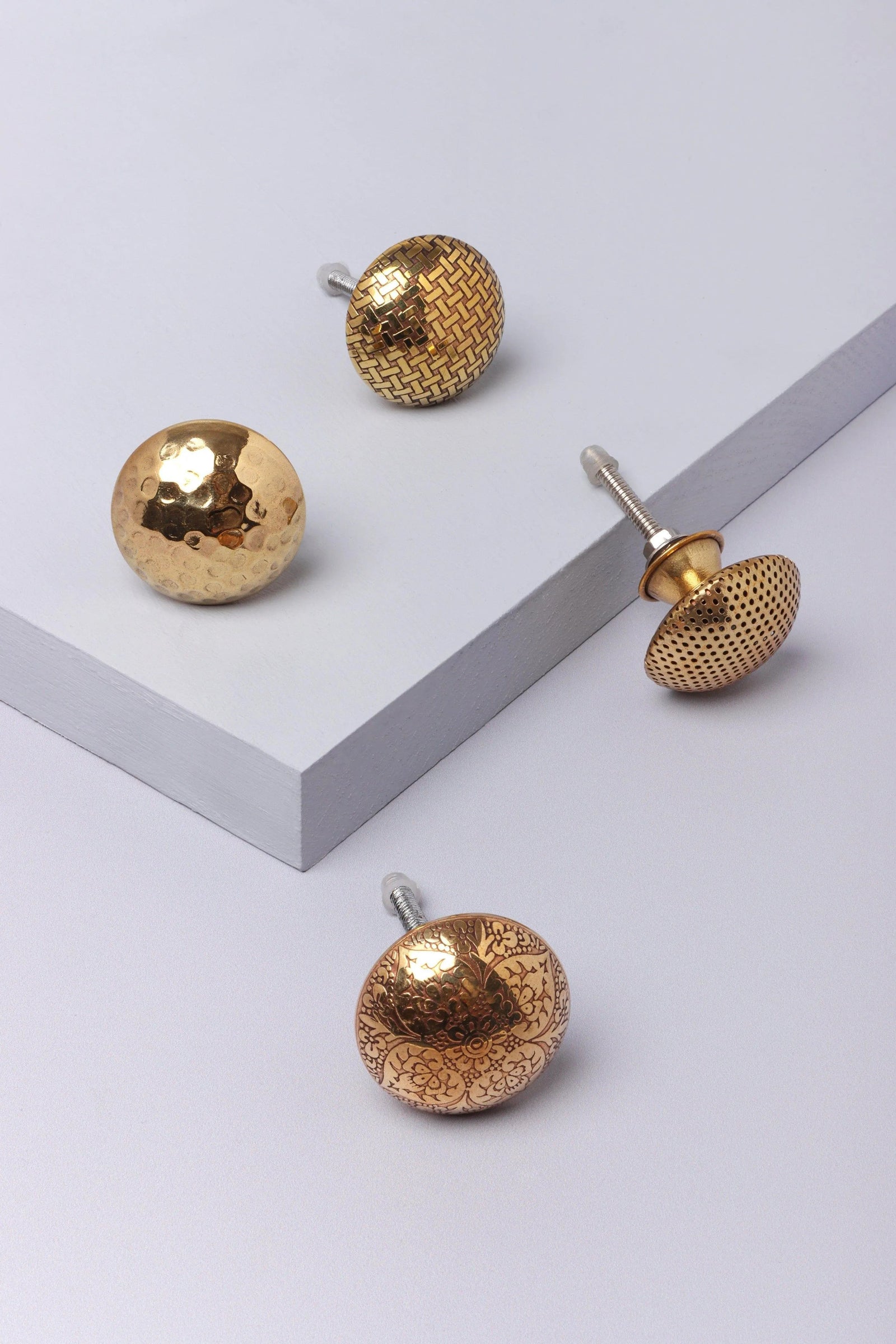
Some of our most characterful pieces arrive already aged — an antiqued or hand-darkened finish applied in the workshop to give new brass the depth of old. The textured surface of the Mughal Brass cabinet knob is a good example: its colour is deliberate and part of the design. These pieces should never be polished, because polishing strips the very finish you chose them for. Treat them as you would living brass at rest — dust, the occasional gentle wipe, and otherwise leave them be. The same holds for the brass bases beneath our hand-painted ceramic knobs, such as the Milano Signature set, where the brass is meant to warm and settle alongside the glaze.
Brass room by room
Where a piece lives shapes how it ages. Brass on a front door meets weather, salt air and constant handling, so it patinates quickly and dramatically — many owners come to love the weathered look and stop polishing altogether. Kitchen and bathroom brass meets steam and oils and benefits from a more regular wipe-down. Bedroom and study hardware, handled less and sheltered from damp, ages slowest and most evenly. None of this requires different products; it simply means reading each room and adjusting how often, not how hard, you clean.
The case for patience
The third word in this article's title is the most important. Brass rewards the owner who does little and waits. The instinct to keep hardware looking box-fresh works against the material; the pieces that look best in a finished home are almost always the ones that have been allowed to settle. Good brass hardware care is mostly restraint — clean gently, polish rarely, and let the metal do what only solid brass can do.
Frequently asked questions
How do I clean brass hardware without damaging it?
Wipe it with a soft, dry or barely damp cloth to lift dust and fingerprints. For greasy kitchen build-up, use warm water with a touch of mild washing-up liquid, then dry immediately. Avoid abrasive pads, cream cleaners and any spray containing ammonia or bleach.
Should I polish my brass or let it patina?
That depends entirely on the look you want. Polishing returns living brass to a bright golden finish; leaving it lets the colour deepen into a characterful patina. Both are correct — choose by taste, not obligation. Lacquered brass should never be polished at all.
How do I know if my brass is lacquered or unlacquered?
Gently rub an inconspicuous area with a brass-impregnated cloth. If the metal brightens, it is unlacquered, living brass that can be polished. If nothing changes, it is sealed with lacquer and needs only a wipe with a soft cloth.
Is patina a sign of poor quality?
No — it is a sign of solid brass. Plated hardware cannot develop a true patina because the brass layer is too thin; only solid brass darkens and warms with age. A deepening patina is one of the clearest signs that a piece is made of real metal worth keeping.
How often should I care for brass hardware?
A light dust or wipe weekly, slightly more often in kitchens and bathrooms where oils and steam settle. Polishing, for those who want a bright finish, is needed at most once or twice a year. Beyond that, the best thing you can do for brass is leave it alone.
A final thought
Brass is one of the few materials in a home that improves simply by being lived with. Clean it gently, polish it seldom, and let patience do the rest — that is the whole of brass hardware care, and the reason a solid brass piece outlasts the trends around it. Explore our Brassworks Edit and signature pieces to find brass made to age beautifully in your own rooms. With more than 700 verified reviews on Trustpilot and over 2,000 store reviews on Judge.me, our pieces are trusted in homes across the UK, US, Europe and Australia.