

The Journal · brass
The Quiet Confidence of British Design
Why does British design endure when most styles date? Restraint, heritage materials, hand-finishing, a daylight-friendly palette. A designer's note on the quiet confidence of British homeware — and why the small considered detail outlasts the loud one.
G · Stories · No. XI · Craft & Makers
A G Decor Note
Question: why does British design endure when most design trends don't? It isn't louder than what comes from Paris, sharper than what comes from Milan, or more colourful than what comes from Mumbai. It's almost always the opposite — quieter, slower, more restrained. And it stays popular for decades.
This is a designer's note on why British homeware design works the way it works. The restraint, the heritage materials, the hand-finishing, the rooms it was made for. And why the small confident detail — a brass knob, a ceramic mug, a glass tumbler — does more for a home than a louder version ever could.
Restraint as a national style
The most consistent thing about British design across centuries is restraint. Where Italian design celebrates form, French design celebrates flourish, and American design celebrates scale, British design celebrates the version of any object that says just enough.
A British country kitchen has plain cabinetry, a single piece of beautiful hardware, and one painting on the wall. A British townhouse drawing room has restrained mouldings, a pair of well-chosen lamps, and a surface that doesn't look styled. A British tea cup has a clean handle and a single line of decoration around the rim. The work of design is to know when to stop.
This isn't modesty. It's confidence. Restraint reads as expensive in a way decoration never does. A room that looks like nothing is happening, but every detail is correct, is the hardest room to design and the easiest to live in.
The heritage materials
British homeware has favoured the same three materials for two hundred years: brass, ceramic, and glass. There are reasons.
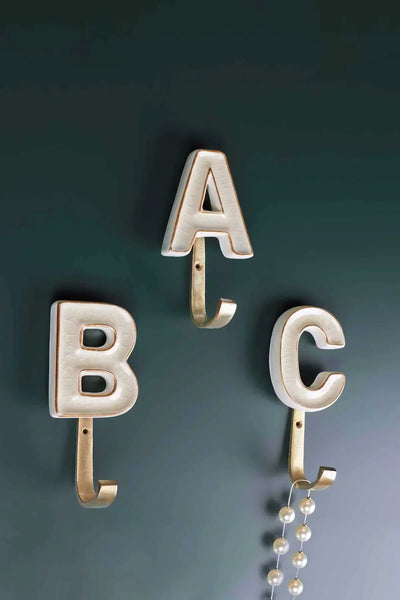
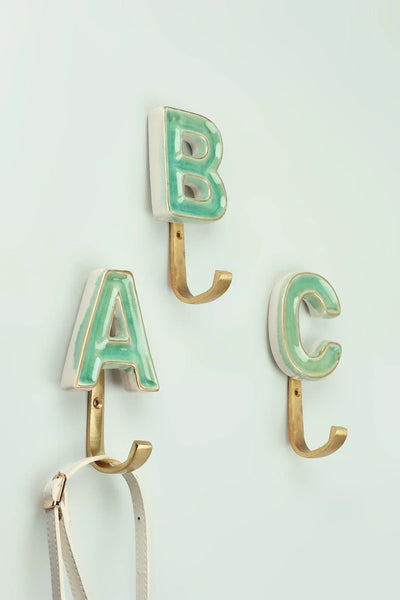
Brass is warm, weighs more than it looks, develops a soft patina over decades of use, and pairs beautifully with British timber (oak, walnut, beech) and British stone (Yorkstone, Cotswold). A brass cabinet pull in a country kitchen looks at home in a way no other metal does.
Ceramic carries colour and pattern without competing for attention. The British tradition of hand-painted ceramic — Wedgwood, Spode, Royal Crown Derby — produced patterns that have stayed in production for two hundred years not because they're showy, but because they're quiet enough to live with.
Glass brings light. British country houses are often dark — small windows, deep walls, low ceilings — and a piece of cut glass in the right place doubles the daylight. Crystal door knobs were invented for exactly this reason.
The reason these three materials remain at the centre of British homeware isn't tradition for tradition's sake. It's that they all reward use. Brass softens. Ceramic glaze deepens. Glass clarifies under regular handling. The materials get better the longer you live with them.
Country house versus townhouse
Two distinct design traditions sit underneath modern British homeware, and most British homes are some combination of both.
The country house tradition is rooms built for daylight, cold weather, and large families. Heavier hardware. Deeper colours. Layered textiles. Brass everywhere. The country house tradition gave us the wing-back chair, the painted dresser, the brass coal scuttle, the hand-painted ceramic knob.
The townhouse tradition is rooms built for a single household, often narrower, often taller. Cleaner mouldings. Lighter palettes. Polished hardware. The townhouse tradition gave us the chrome fitting, the cut-glass tumbler, the Georgian fanlight, the polished brass front door.
A modern British home pulls from both. The brass cabinet knob with a ceramic top reads as country; the cut-glass mortice door knob reads as townhouse; both work in the same house if the rest of the room knows where it's going.
The understated colour palette
British design's colour palette is famously narrow. Cream, ink, sage, soft pink, dusky blue, mushroom, oxblood. A few greens, a few yellows, a few neutrals. The same fifteen colours appear in nearly every British design publication for the last fifty years.
This is a strength, not a limitation. A narrow palette ages well. A bold orange or hot pink dates a room within a decade. A sage green or dusky blue stays correct for a generation. British design tends toward the colours that flatter daylight in northern Europe — soft, slightly grey, never tropical.
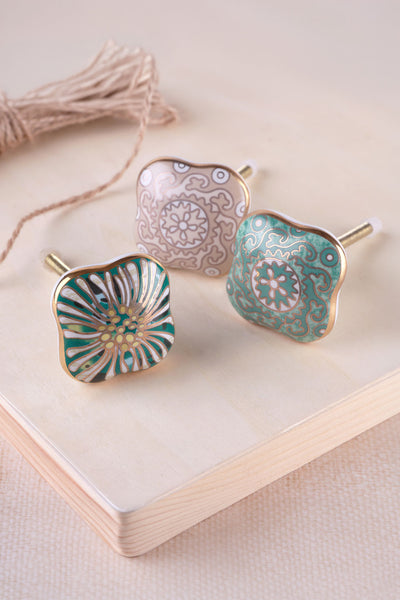
The hand-painted ceramic knobs that work best in a British home are almost always in this palette. Not because of market research, but because the colours sit comfortably with the country's light. Browse our ceramic door knobs for examples in this restrained, daylight-friendly tradition.
Hand-finishing as a British value
The British design tradition has always favoured the hand-finished version of an object over the machine-perfect version. A Wedgwood plate hand-painted under glaze. A piece of Stoke ceramic hand-trimmed before firing. A cut-glass tumbler hand-finished at a Stourbridge wheel.
The reason is partly aesthetic — slight variation reads as character — and partly cultural. British buyers have historically valued the evidence of human work over the evidence of factory precision. A hand-painted knob that varies slightly between pieces feels British in a way an identical machine-stamped one never does.
Modern British homeware brands continue this tradition because the buyers who want it haven't gone away. People who care about the difference between hand-finished and mass-produced are still buying for their homes, and still paying the small premium that hand-work requires.
Why British design exports well
For a small country, British design has had outsized influence on global homeware. Liberty patterns are sold in fifty countries. Wedgwood is in every department store in Asia. The English country kitchen is being copied in Brooklyn, Sydney, Tokyo and Mumbai.
The reason isn't that British design is better. It's that British design is calmer than most national alternatives. In a global market full of louder, more decorated, more colourful products, the quieter British option stands out by not standing out. Restraint reads as confidence, and confidence translates everywhere.
A French buyer choosing a door knob, a Japanese buyer choosing a candle holder, an American buyer choosing a cabinet pull — they often choose the British version because it's the one that doesn't shout. It will look correct in their kitchen for the next twenty years, regardless of what design fashion does in the meantime.
Modern British homeware: where it's going
The current generation of British homeware is a return to craft after several decades of mass-production dominating the high street. Smaller workshops. More hand-finishing. More attention to materials. Less interest in the latest trend, more interest in pieces that earn a place in a home for ten or twenty years.
G Decor sits within this tradition. Designed in England, drawing on British materials and British colour traditions, finished by hand, made for buyers who care about the difference. Browse our full collection, our door knobs, cabinet knobs, and glassware.
What this means when buying for the home
If you're buying for a British home — or for any home that wants to feel calmer, more considered, more lasting — there are a few useful principles drawn from the tradition:
- Choose materials that age well. Brass that develops a patina, ceramic that softens, glass that clarifies. Avoid plastics, painted metals, and finishes that degrade.
- Repeat one element across the room. One metal, one colour, one form. The British eye reads repetition as design and contrast as accident.
- Keep the palette narrow. Two or three colours per room, with neutrals doing most of the work. Bright accents in small doses.
- Choose hand-finished where the budget allows. A hand-painted ceramic knob will outlast and out-look a stamped metal one for the same money over ten years.
- Buy fewer, better pieces. The British design tradition is built on the assumption that a few well-chosen objects beat many average ones.
Frequently asked questions
What defines British design as a tradition?
Restraint. Heritage materials (brass, ceramic, glass). A narrow, daylight-friendly colour palette. A preference for hand-finishing over machine-perfection. Confidence in understatement.
Why does British design endure when other styles date?
Because it tends toward the version of any object that won't look wrong in twenty years. Restraint ages better than decoration; narrow palettes age better than bright ones.
What materials are most associated with British homeware?
Brass, ceramic, and glass — the three materials British design has favoured for two hundred years because they all reward daily use and develop character over time.
Is British design the same as English design?
Mostly used interchangeably for homeware, though “English design” specifically often refers to the country house tradition. “British design” includes Scottish craft, Welsh slate work, and a wider regional heritage.
Where does G Decor sit within British design?
Designed in England, drawing on the British heritage of brass, ceramic and hand-painted finish. We sit within the modern British homeware tradition that values craft, materials, and restraint over trend and decoration.
A final note
British design endures because it has, at its centre, a commitment to the version of any object that says just enough. The brass knob that catches light without announcing itself. The ceramic mug that holds tea well and looks correct on the table. The cut-glass tumbler that brightens a dark hallway. None of these objects are loud. All of them last.
Browse G Decor's collection — designed in England, finished by hand, made for homes that value the quiet confidence of considered design. With more than 700 verified reviews on Trustpilot and over 2,000 store reviews on Judge.me, our pieces are trusted in homes across the UK, US, Europe and Australia.
Further reading
- How We Make a Hand-Painted Monogram — A letter, painted by hand, fired into glaze. The five-step process behind every monogram piece.
- British Craft: How a Hand-Painted Knob Gets Made — The workshop, the hands, the kiln. Why hand-finished hardware looks alive.
- Ceramic vs Brass vs Chrome Door Knobs: Which Finish Suits Your Home? — Three finishes, side by side — when each one wins and how to combine them without a showroom look.