

The Journal · British design
A Hallway with Character
The hallway is the most under-loved room in most homes. A designer's guide to first impressions: door hardware, coat hooks, lighting and the small details that make a hallway feel like the start of the house, not the in-between.
G · Stories · No. V · Room by Room
A G Decor Guide
Question: what's the first thing a guest sees when they walk into your home? Almost always, it's the hallway. And almost always, it's the room that gets the least attention. We renovate kitchens, repaint living rooms, restyle bedrooms — and leave the hallway as the in-between space we hurry through.
This is a designer's guide to giving the hallway the same care as the rest of the house. Coat hooks, door hardware, light, the small first-impression details that make the hallway feel like the start of the home rather than the corridor between rooms.
Why hallways get ignored
Hallways are typically narrow, often dark, and rarely lived in. Nobody sits down in a hallway. Nobody makes coffee there. So they get treated as circulation space — somewhere to pass through, not somewhere to design.
Which is exactly why they're the most powerful space in the house to get right. The hallway sets the tone for everything else. A guest who walks into a considered hallway expects the rest of the house to be considered too. A guest who walks into a builder-grade hallway adjusts their expectations accordingly.
The first piece of hardware: the front door
The front door is the first thing people touch when they enter your home. The hardware on it is the first piece of design they encounter. Most front doors have whatever hardware was installed when the house was built — usually plain chrome or builder-grade brass that's never been thought about.
Replacing it is the single highest-impact change you can make to the hallway. Solid brass for warmth and heritage. Antique brass for older homes. Polished chrome for modern homes that need a sharper edge. The bar is set the moment someone touches the door.
Browse our front door hardware — sized and finished to take the weather, and chosen to make the first touch feel intentional.
The hallway door: the second hardware decision
If your hallway has internal doors leading off it — to the living room, the kitchen, the cloakroom — the door hardware on the hallway side of those doors is what guests see when looking down the corridor.
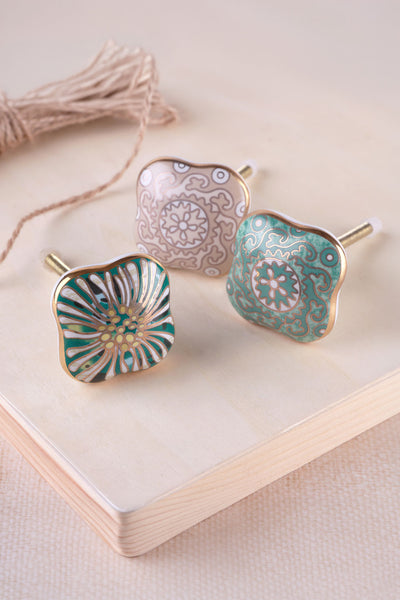
This is where ceramic mortice knobs earn their place. A row of consistent hand-painted ceramic knobs visible down the hallway turns the doors into a feature rather than a series of obstacles. Pick one colour — sea blue, sage green, soft pink — and repeat it across all the hallway-facing doors. The corridor stops being a corridor and starts being a small gallery.
Browse our internal door knobs for ceramic options on brass or chrome bases.
Coat hooks: the most under-considered hardware in the home
Most hallways have either no hooks at all or a row of cheap plastic ones from a hardware shop. Both are missed opportunities.
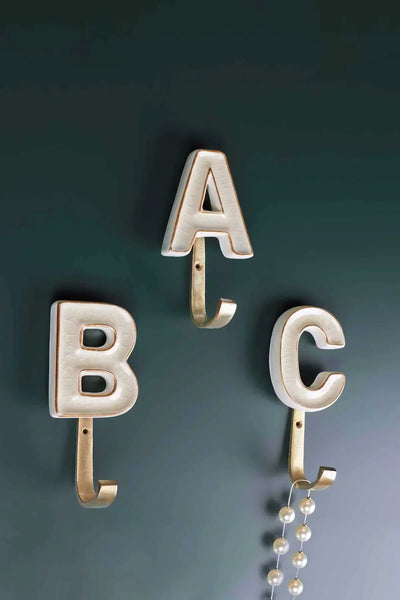
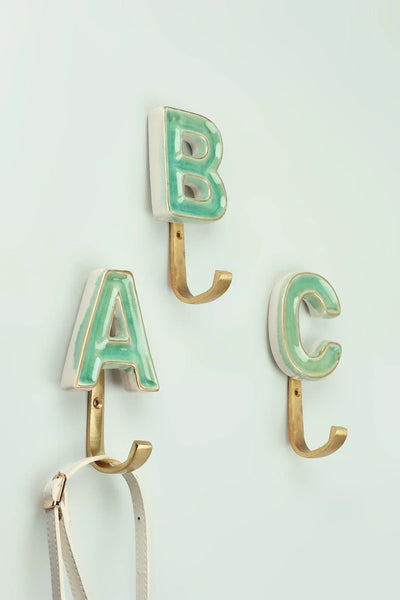
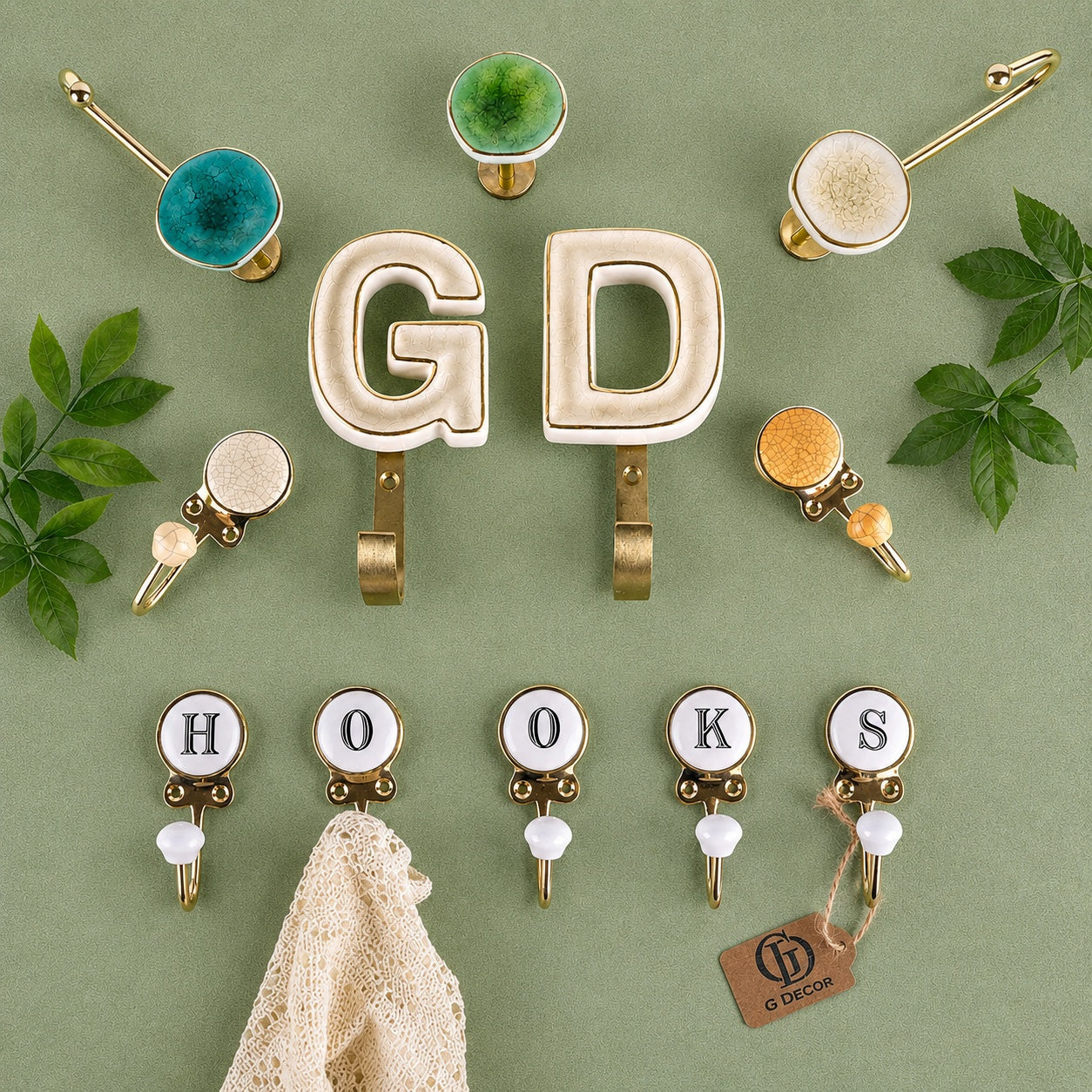
Coat hooks do double duty: they're practical (every guest needs somewhere to put a coat) and decorative (they're at eye level, on a wall, often the most visible piece of hardware in the house). A row of monogrammed ceramic hooks across one wall of the hallway is functional, personal, and visible from the front door.
Two of our most popular options:
- Personalised Green Crackle Monogram Coat Hooks in Antique Brass — hand-painted ceramic with the recipient's initial in soft green crackle glaze. Romantic, personal, immediate.
- British Pub Tile Monogram Hooks in Black & Gold — the look of a traditional British pub sign, monogrammed for the household. Striking in dark hallways.
One initial per family member, mounted at eye level on a board or directly to the wall. Practical and personal in one move.
Light in narrow spaces
Most hallways are too dark and lit by a single overhead pendant or downlight. The fastest fix is to add a second source.
- A small wall light or sconce halfway down the hallway, casting light onto the wall.
- A console table lamp on a narrow side table, if there's room.
- Warm bulbs everywhere. 2700K, the same rule as bedrooms. Cool-white LEDs in a hallway are a small horror.
Two warm light sources at different heights make a narrow hallway feel like a room rather than a tunnel. The wall light also doubles as art — a brass sconce with a fabric shade is a visual moment in itself.
The mirror question
A mirror in the hallway does three things: bounces light, makes the space feel wider, and gives guests (and you, on the way out) a place to check their appearance. It's almost always the right call.
Choose a frame that matches the hardware finish elsewhere in the hallway — brass mirror, brass coat hooks, brass door knobs reads as one design. Or use the mirror as a contrast piece: brass hardware with a black-framed mirror gives more drama.
Hang it at eye level for the average household member, opposite a window or wall light if possible to bounce the light back through the space.
One piece of art
Hallways are perfect for one strong piece of art. The narrow space concentrates attention, so a single framed photograph, print or painting can do all the work without competing with anything else.
Frame it properly. Our Lucca Bone Inlay frame in vintage green and aged brass works particularly well in hallways — the dark frame and inlay detail reads from across the corridor in a way a plain frame doesn't.
Hang it at the end of the hallway if there's a flat wall there — the eye is naturally drawn to the end of a corridor, and a piece of art at the focal point makes the space feel finished.
The runner question
A long, narrow runner rug down the hallway softens the floor, dampens sound (hallways echo), and adds a layer of texture. Choose one with a quiet pattern or a clear edge so it reads as intentional rather than accidental.
Length: long enough to run the bulk of the corridor without bunching. Width: narrower than the hallway with floor showing on either side — a runner that fills the full width looks like wall-to-wall carpet.
What to skip
A few hallway moves that don't pay off:
- A console table piled with mail, keys and coins. The console table is fine. The pile is the problem. Add a small dish for keys, a tray for incoming mail, and clear it weekly.
- A welcome sign. The hallway is the welcome. It doesn't need to announce itself.
- Statement wallpaper plus pattern carpet plus pattern art. Hallways are narrow. One feature, not three.
- Storage furniture in narrow hallways. A hallway under 1.2 m wide can't take a bench, a shoe cabinet and a console without becoming an obstacle course. Pick one piece, or skip them and use wall hooks instead.
The order of operations
If you're working through the hallway in order:
- Replace the front door hardware. First-impression piece, highest impact.
- Add or replace coat hooks — one per household member, mounted at eye level.
- Hang or upgrade the mirror — matched to the hardware finish.
- Fix the light — warm bulbs, second source if possible.
- Hang one piece of art at the end of the hallway, properly framed.
- Add a runner if the floor is hard and the hallway echoes.
- Replace the internal door knobs visible from the hallway with one consistent finish.
That's a hallway with character. Done in stages over a weekend or two, with a budget that almost any household can absorb.
Frequently asked questions
What's the highest-impact hallway upgrade?
The front door hardware. It's the first thing every guest touches, and most homes still have whatever was installed when the house was built. Replacing it changes the entire first impression of the house.
How many coat hooks should a hallway have?
One per household member, at minimum. Two or three extra for guests if there's room. Mount at eye level for adults and at lower height for children.
Should the hallway match the rest of the house?
The hallway should connect visually to the rooms that lead off it — matching or complementary hardware finishes, similar light temperature. But the hallway can carry its own statement piece (one strong art work, a feature wall) that the connecting rooms don't repeat.
Are wall hooks better than a coat rack?
In narrow hallways, yes. Wall hooks save floor space, look intentional, and double as decoration. Coat racks belong in larger entry halls or mudrooms.
What's the best lighting for a dark hallway?
Two sources at different heights, both with warm 2700K bulbs. An overhead fixture for general light, plus either a wall sconce or a console lamp for a softer second layer.
A final note
The hallway sets expectations for the rest of the house. A considered hallway tells guests — without anyone saying anything — that the house has been thought about, not just lived in. The cost of doing it well is small. The return on first impressions is enormous.
Browse G Decor's front door hardware, internal door knobs, and hooks and wall hardware. With more than 700 verified reviews on Trustpilot and over 2,000 store reviews on Judge.me, our pieces are trusted in homes across the UK, US, Europe and Australia.
Further reading
- Cabinet Hardware: The Detail That Defines a Kitchen — Why designers spec the cabinet hardware before the cabinetry itself.
- How to Style a Sideboard: A Designer's Guide — The rule of three, the four-layer system, room-by-room ideas — a sideboard that lasts seasons not weeks.
- The kitchen at first light — On the half-hour after dawn — the objects that earn their place at that hour.