



The Journal · British Design
The Mantelpiece: How to Style One Without Cluttering It
A designer's guide to styling a mantelpiece without clutter — choosing an anchor, building height with candles, layering with restraint and shifting the look gently through the season.
When did the mantelpiece become the hardest surface in the house to get right? It is the one shelf everyone in the room ends up looking at, and yet most are styled by accident — too bare and the mantelpiece reads unfinished, too full and it reads like a jumble sale. A considered mantelpiece sits somewhere quieter: composed, a little personal, and never trying too hard.
Why the mantelpiece earns the attention it gets
A fireplace is the one fixed point most living rooms are built around. Sofas turn towards it, the eye settles on it, and the shelf above it sits at roughly the height where people naturally look. That makes the mantelpiece a stage whether you treat it as one or not. The reward for styling it well is a room that reads as designed rather than simply furnished; the penalty for ignoring it is a surface that quietly collects post, spare keys and a candle someone half-burned at Christmas.
The good news is that a mantelpiece responds to restraint better than almost any other surface in the home. You are not decorating a whole wall — you are composing a single, low horizontal line. Get three or four decisions right and the rest of the room tends to fall into place around it.
Start with the surround, not the objects
Before you place a single thing, look at the mantel itself. A heavy stone or carved timber surround can carry weight and scale; a slim painted shelf wants a lighter touch and fewer pieces. The colour of the surround matters too — a dark marble reads dramatic and will swallow dark objects, while a pale limestone gives you a soft backdrop that almost anything will sit against happily.
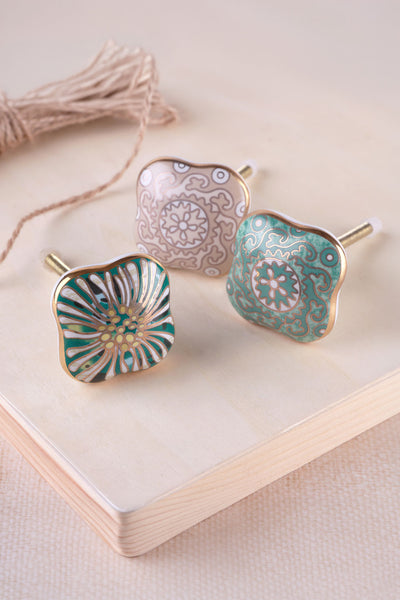
This is also the moment to think about the wall above. A mantelpiece is rarely styled in isolation; it works in conversation with whatever hangs or leans behind it. If you are choosing hardware and finishes elsewhere in the room — the fire tools, a nearby cabinet knob, a pair of wall lights — let the mantel echo one of those metals rather than introducing a fourth. Our home décor edit is a useful place to see how brass, ceramic and glass behave next to one another before you commit.
The anchor, and the art of one big thing
Every well-styled mantelpiece has an anchor: one object, usually placed off-centre, that the rest of the arrangement defers to. Most often it is a piece of art — a framed painting, a mirror, a print leaned rather than hung. The anchor does the heavy lifting of scale, which frees everything else to be smaller and quieter.
Resist the urge to centre it. A large piece sitting dead-centre with matching objects flanking it can feel like a mantelpiece in a hotel lobby — correct, but lifeless. Pull the anchor a third of the way along and let the composition breathe asymmetrically. The room will feel more relaxed for it.
Leaning versus hanging
Leaning a mirror or artwork against the wall, rather than fixing it, is one of the most forgiving tricks in mantelpiece styling. It adds a casual, collected-over-time quality, lets you change your mind without filling holes, and gives you a soft overlap where smaller objects can tuck in front. A leaned piece also reads as deliberate informality — exactly the note a heritage British interior tends to strike best.
Building height, weight and rhythm
A flat row of similarly sized objects is the quickest way to make a mantelpiece look cluttered, because the eye has nowhere to rest. The fix is rhythm: vary the height, vary the visual weight, and leave deliberate gaps. Think of it as a small skyline rather than a shelf — tall, medium, low, pause, repeat.
Group in odd numbers. Three objects of descending height read as a considered cluster; two matching objects read as bookends and tend to look static. And always leave breathing room at the edges. A mantelpiece that runs corner to corner with objects feels anxious; one with clear space at each end feels confident.
Candles as the vertical line
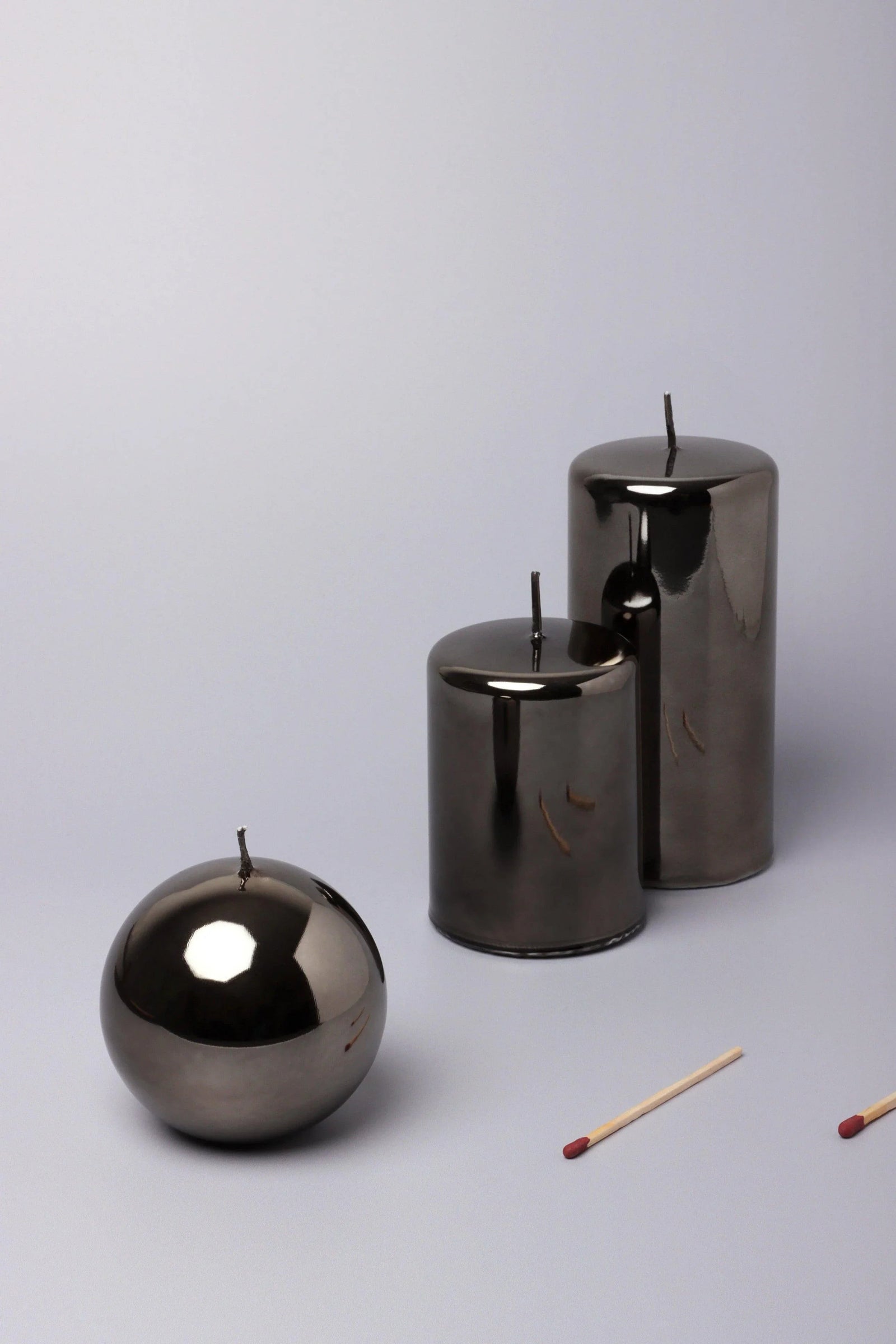
Candles are the most useful tool you have for introducing height without bulk. A pair of pillar candles at slightly different heights gives you a strong vertical that a low object — a stack of books, a small bowl — can sit beneath. The mirror-glass Clarae Reflet pillar and ball candle in Grey Mist does this particularly well on a mantelpiece, because the reflective surface picks up the light from the room and the fire and keeps the shelf feeling alive even before anything is lit.
If you prefer a slimmer line, dinner tapers in a low holder give you the same height with more delicacy. The wider candle collection is worth browsing for the colour that sits best against your surround — soft greys and chalky neutrals on pale stone, deeper tones against dark marble.
Layering without the clutter
Layering is what separates a styled mantelpiece from a tidy one, but it is also where most arrangements tip into clutter. The discipline is simple: every object should either earn its place by being beautiful or by being useful, and ideally both. A hand-finished vessel, a single sculptural piece, a low bowl that actually holds something — these layer well. Three small ornaments that do nothing but sit there do not.
Use front-to-back depth rather than crowding side to side. A leaned frame at the back, a vase in the middle ground, a small object overlapping in front — that staggering creates depth on a shallow shelf and lets you include more without it reading as busy. The architectural Linea Atelier ceramic vase is a quiet way to add that middle-ground height, with a form clean enough that it never competes with the anchor.
One more rule worth keeping: a mantelpiece is not a gallery of everything you own. Edit ruthlessly, then edit again. The pieces you remove are doing as much for the composition as the ones you keep. For the few objects that stay, choose the ones with real craft in them — the signature pieces that reward a closer look — rather than filling the shelf with things that only work from across the room.
Styling the mantelpiece by season
The best mantelpieces are not set once and forgotten. They shift gently through the year, which keeps the room feeling current without any real effort. In spring and summer, lighten the palette — pale candles, a stem or two of greenery in a simple vase, more open space. In autumn and winter, let it warm up: deeper candle tones, more layering, the comfort of a fuller shelf when the fire is the centre of the room.
You do not need a different set of objects for each season — you need two or three swappable pieces. A change of candle colour and a change of what sits in the vase will carry most of the seasonal shift on their own. Keep a small reserve of candle holders and vessels so the mantelpiece can be restyled in ten minutes rather than rebought.
Frequently asked questions
How many objects should I put on a mantelpiece?
As a rule, fewer than you think — usually one anchor piece plus three to five supporting objects, grouped in odd numbers with clear space at each end. If you cannot easily see the surface of the mantel between the pieces, you have crossed from styled into cluttered.
Should everything on the mantelpiece be symmetrical?
Strict symmetry tends to look formal and a little static. A more relaxed, asymmetrical arrangement — anchor off-centre, varied heights, deliberate gaps — almost always feels more considered and more like a home. Save true symmetry for very grand, classical rooms where it suits the architecture.
Can I put candles on a mantelpiece with a working fireplace?
Yes, with sensible placement. Keep candles towards the ends of the mantel rather than directly above the firebox, set them in stable holders, and never leave them burning unattended. Pillar candles and tapers in proper holders are both well suited to a mantelpiece; just give them room from anything flammable above.
What do I do if my mantelpiece is very narrow?
Work with depth instead of width. Lean a mirror or frame at the back to add height without taking up shelf space, then place just two or three slim objects — a pair of candles and one low piece — in front of it. A narrow mantelpiece is far better lightly styled than crammed.
How do I stop my mantelpiece looking cluttered?
Start by removing everything, then add back only the pieces that are genuinely beautiful or useful, building around a single anchor. Vary the heights, leave gaps, and stop while you still feel the arrangement could take one more thing — that restraint is what keeps a mantelpiece looking composed.
A final thought
A mantelpiece rewards editing more than effort. Choose one anchor, a little height, a few well-made pieces with room to breathe, and let the surround and the season do the rest. If you are putting yours together, our candles, candle holders and wider home décor collections are a considered place to begin — pieces made to be lived with and restyled, not just looked at. With more than 700 verified reviews on Trustpilot and over 2,000 store reviews on Judge.me, our pieces are trusted in homes across the UK, US, Europe and Australia.