

The Journal · Atelier
How We Make a Hand-Painted Monogram
A letter, painted by hand, fired into glaze. The five-step process behind every personalised piece in our Monogram Edit.
A letter, painted by hand, fired into glaze. The process behind the personalisation.
A monogram is the smallest possible piece of personalisation — one letter, three strokes, the difference between a generic ceramic knob and one that belongs to someone. At G Decor, every monogram on every piece is painted by hand. There are 26 of them, painted by people we know, into ceramics fired the same week.
This is the short version of how that happens.
1. The blank
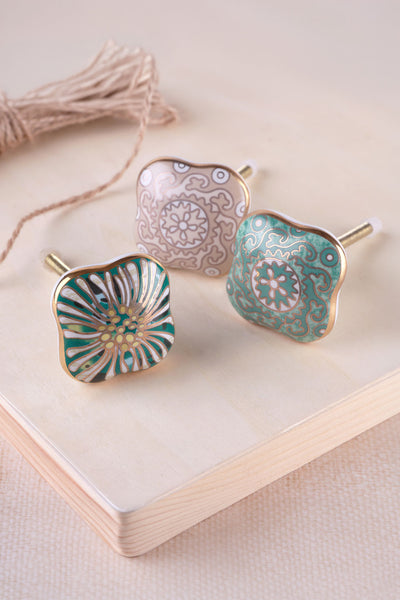
The piece starts as a fired, glazed ceramic blank — a knob, a hook, a coaster, a mug — in one of our standard finishes (white, cream crackle, pub tile black). It arrives at the painting bench as a finished thing in its own right. The monogram is the final hand on it.
2. The brushes
We use three brushes for monogram work — a fine liner for the outline, a slightly wider brush for the centre stroke, and a small flat for any infill. They're cleaned at the end of every session and replaced when the bristles begin to splay. The brushes outlast most of our days but not all of our years.
3. The hand
This is the part we don't speed up. Each letter is painted by one of three studio painters, freehand, working from a printed reference for letterform proportion. There's no template, no transfer, no spray. The painter's hand decides where the letter sits on the ceramic, how the curve of an O resolves against the curve of the knob, how a Q's tail is drawn.
This is also why no two monograms are identical. Place a row of M cabinet knobs from the same batch side by side and you'll see it — the same letter, made the same way, by the same hand, on the same day, will vary by a fraction in every stroke. That's the work.
4. The kiln
The painted piece goes into a low-temperature firing kiln — around 780°C, lower than the original glaze firing. The paint, which is an enamel pigment suspended in a glaze medium, melts into the existing glaze and becomes part of the ceramic itself. After firing, the letter cannot be scratched off. It will wear at the same rate as the piece beneath it.
This is why we don't use stickers, decals or printed transfers. They'd lift within a year. A fired monogram lasts as long as the ceramic.
5. The check
Every piece is hand-inspected before it leaves the studio. Letters that are off-centre by more than a couple of millimetres, or where the paint has skipped at the edge, are set aside and reworked. We accept variation; we don't accept errors. It's a fine line and the painters know where it sits.
What this means for you
When you order a monogrammed piece from G Decor, you're not buying a customised version of a stock item. You're buying a piece that was made for that letter. The painter held the blank, looked at the letter, made small decisions about how it would sit, and laid the paint down with a kind of attention you can see when you look closely.
Which is also why we don't rush them. Monogrammed pieces take a week or two longer than non-personalised orders. That week is the painter's week — and it shows.
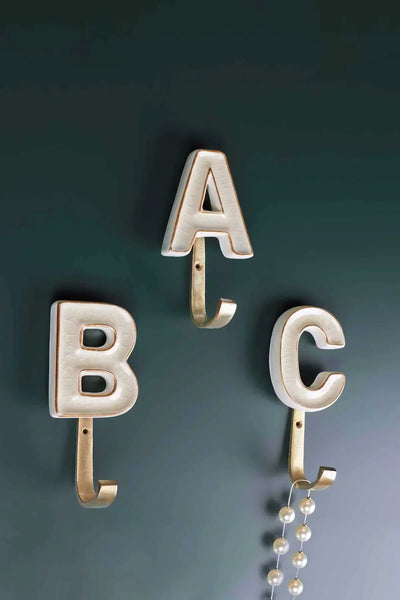
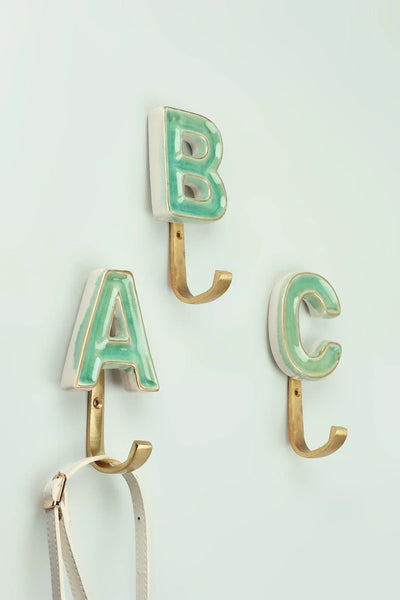
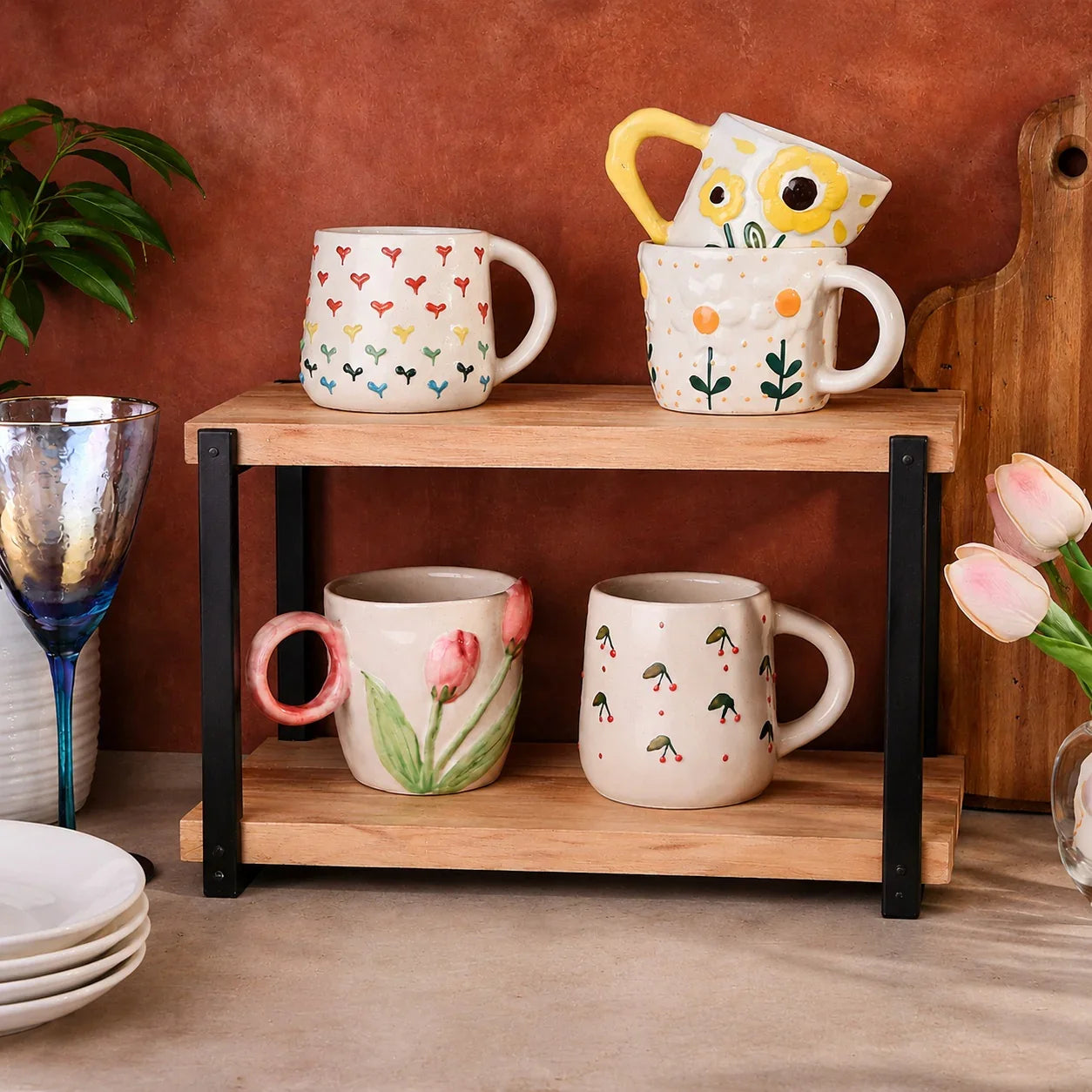
If you'd like to see the work in person, our Monogram Edit is the full capsule — cabinet knobs, hooks, coasters, mugs and frames, every piece available A to Z.
— the G Decor team
Further reading
- Housewarming Gifts the Recipient Still Talks About a Year Later — Small, hand-finished pieces they encounter every day — gifts that earn their place in someone else's home.
- The Quiet Confidence of British Design — Restraint, heritage materials, hand-finishing. Why considered detail outlasts loud detail.
- British Craft: How a Hand-Painted Knob Gets Made — The workshop, the hands, the kiln. Why hand-finished hardware looks alive.