

The Journal · British design
The Art of a Long Lunch: Glassware Worth Pouring Into
What makes a glass worth keeping for forty years? Weight, balance, the way it catches light, and the small variations that mean a person made it. A designer's guide to glassware that's worth pouring into — and using on a Tuesday.
G · Stories · No. VII · Hosting & Tables
A G Decor Guide
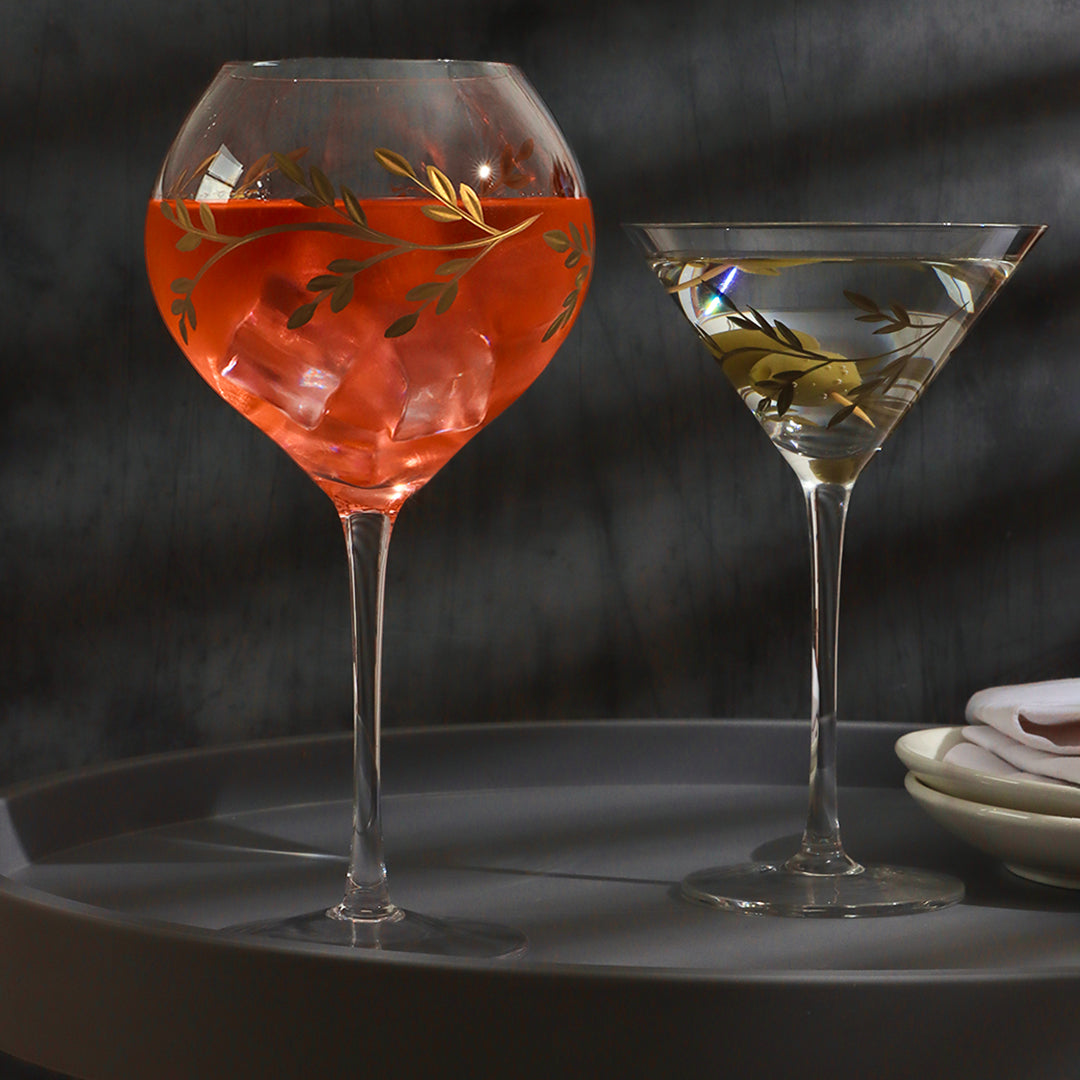
Question: what makes a glass worth keeping for forty years? Not the price exactly. Not the brand. It's the weight in the hand, the way the stem balances against the bowl, the small variations that mean a person made it. The glasses that get passed down between generations are almost always handblown, almost always have a story, and were almost always used.
This is a designer's guide to glassware worth pouring into. What separates a good glass from a forgettable one. When to splash out and when not to. And the case for actually using the good glasses on a Tuesday rather than saving them for a dinner party that never happens.
Handblown vs machine-pressed
The biggest decision in buying glassware isn't shape or size — it's how it was made. Handblown and machine-pressed glasses look similar at first glance and feel completely different in the hand.
Handblown glass is shaped by a person breathing into a tube of molten glass. Each piece is slightly different. The walls might vary in thickness by a fraction of a millimetre. There may be a small bubble somewhere in the bowl. The stem may have a tiny twist. These aren't faults — they're evidence of human work, and they're what makes handblown glass feel alive in the hand.
Machine-pressed glass is identical to every other glass in the production run. Cheaper, more consistent, and lighter. The lightness is the giveaway — pick up a handblown glass and a machine-pressed glass at the same time, and the handblown one will sit more comfortably in your palm.
Our Yaki Hammered Wine Goblets and Blush Bow Wine Glasses are both handblown, both shaped by hand, both designed to feel different in the hand than anything mass-produced.
Weight: the most under-discussed quality
Pick up an expensive glass and a cheap one. The expensive one weighs more. Not because there's more glass — the walls are often thinner on the expensive one — but because the glass itself is denser and better balanced.
The weight matters because it changes how the wine feels when you drink it. A heavier glass sits firmly in the hand. The wine doesn't slosh as you swirl. The bowl doesn't tip easily. Drinking from a heavy glass feels intentional in a way drinking from a lightweight one doesn't.
This is why hotel and restaurant glassware is almost always heavier than what people buy for home use. Hotels know that the weight does work the food and wine alone can't.
Stem shape and what it does
The stem isn't decorative. It's the part that lets you hold a glass without warming the wine, and it's the part that determines whether the glass tips over.
- A long, thin stem is elegant and gives you the most room to hold the glass without touching the bowl. The trade-off: easier to knock over.
- A short, thick stem is more stable, harder to knock over, and feels solid in the hand. The trade-off: less elegant in formal settings.
- A patterned or coloured stem — like the pink and green of our Laurent Fluted Wine Glasses or the bow shape of the Blush Bow set — is the design choice. The stem becomes the feature. Best for occasional use rather than everyday.
- A stemless glass works for everyday use and water but isn't right for wine that needs to stay cool — your hand warms the bowl directly.
Mixing sets vs matching sets
Most glassware advice tells you to buy a matching set of twelve. The more interesting move is to buy two complementary sets of six, or even mix three smaller sets that share one element — same stem colour, same height, same era of design.
Mismatched glassware that has visual coherence reads as collected. Matching sets read as bought. Both work, but the collected look ages better and forgives breakages: when one glass shatters, you don't lose a complete set.
Our handblown wine glasses come in sets of four for exactly this reason — small enough sets that you can layer two or three together for a dinner party of eight or twelve, with each set adding visual interest rather than uniformity.
The daily glass philosophy
The biggest mistake in glassware ownership is saving the good glasses for occasions. The Tuesday-night glass should be one you actually want to drink from. The Sunday-roast glass too. Saving the good ones for special occasions usually means using them four times a year and watching them fade in the cabinet.
Half the value of a beautiful glass is the daily reminder that beauty is for daily use, not display. Drink your morning water from a handblown tumbler. Pour your tea into a glass mug worth looking at. Use the wine glass with the patterned stem on a Wednesday. The glasses don't break faster from use; they justify their existence.
Care: dishwasher, hand wash, and the truth about both
Most handblown glassware will technically survive a dishwasher. It will not survive looking new in a dishwasher.
The combination of heat, harsh detergent, and rapid drying causes microscopic etching on glass surfaces over time. After a hundred dishwasher cycles, even the best glass starts to look cloudy. After two hundred, it's permanent.
The simplest fix: hand-wash the good glasses, dishwasher the everyday ones. A separate routine takes five minutes after a meal and adds years to the life of glassware that costs ten times as much as the everyday set.
If you must dishwasher, use the lowest temperature setting, half the recommended detergent, and remove the glasses immediately at the end of the cycle to air-dry rather than steam-dry.
What to skip
- Crystal stemware that needs hand polishing. Beautiful but high-maintenance. Modern lead-free crystal looks similar and is more practical.
- Highly themed glassware. Glasses with painted reindeer, beach scenes, or wedding hashtags age out fast. Buy plain or buy textural; skip the imagery.
- Mismatched random glassware bought one piece at a time. Looks chaotic. Mismatched purposeful sets look collected.
- Plastic 'wine glasses' for the garden. They don't keep wine cool, they bounce when knocked over, and they signal exactly nothing about the meal.
Frequently asked questions
How many wine glasses should a household own?
Two sets of six covers most households — enough for a dinner party of eight or twelve with a couple of breakages forgiven. A third set of four for water completes the picture.
Are handblown glasses worth the extra cost?
Yes if you'll use them. The weight, balance and visual character justify the price for daily-use pieces. Handblown glasses kept in a cabinet for special occasions don't earn their keep.
Can handblown glassware go in the dishwasher?
Technically yes; practically no. Repeated dishwasher cycles cause cloudiness over time. Hand-wash to keep handblown glasses looking new for decades.
What's the difference between a wine glass and a water glass?
Water glasses are usually shorter and have wider rims for easier drinking. Wine glasses have narrower rims to concentrate aroma. In a relaxed setting, one good glass can do both jobs.
Should glassware match the rest of the table?
It should connect through one element — colour, weight, era of design — rather than match exactly. Matching everything reads as a wedding registry; connecting through one element reads as collected.
A final note
The best glassware isn't the most expensive. It's the kind that feels right in the hand, looks alive in the light, and gets used on a Tuesday as readily as a Saturday. Weight, balance, the small variations that come from being made by a person — that's what makes a glass worth keeping. And worth pouring into.
Browse G Decor's glassware, including our Laurent Fluted and Blush Bow handblown sets. With more than 700 verified reviews on Trustpilot and over 2,000 store reviews on Judge.me, our pieces are trusted in homes across the UK, US, Europe and Australia.
Further reading
- A British Summer Table — Long lunches, hand-blown glass, and the way summer asks to be set.
- The Ultimate Guide to Dinner Candles — Types, colour, holders, occasion-by-occasion styling — from tapers to twists to hand-rolled beeswax.
- The Drinks Tray at Twilight — A small ceremony at the end of the day — on glassware, low light, and the cocktail hour at home.