

The Journal · British Design
How to Choose Table Lamps for the Home: A Designer's Guide to Light, Scale and Atmosphere
A designer's guide to choosing table lamps — where they go, how to scale them, which shades and bulbs flatter a room, and how to layer light into a considered scheme.
A room is half furniture and half light. Switch off the overhead at dusk, let a single table lamp do the work, and you understand why the English drawing rooms of any decade worth remembering were never lit from above.
Why a table lamp matters as much as the sofa
The lighting of a room is the slowest of its furnishings to be noticed and the first to be felt. A house that is brightly and evenly lit at all hours is a house that never quite settles. A house with three or four lamps glowing low at eye level, on different surfaces, at different heights, has done most of the work of decoration before a single cushion has been chosen. The right lighting is the difference between a room you stand up in and a room you sit down in.
Designers talk about the rule of three light sources — that every room wants at least three points of light, ideally at three different heights, almost never all of them on the ceiling. Table lamps are how that rule is kept. They warm a corner without flooding it. They throw a small theatre of light onto a console, a sideboard, a stack of books, and let the rest of the room recede gently into shadow. They turn an interior into an evening.
Choosing them well is partly practical — proportion, bulb, placement — and partly something more like instinct. The lamps that earn their keep in a house are rarely the cleverest pieces; they are the ones that look right beside a chair you intend to read in, and that throw the kind of light you want to come home to in November. This guide sets out the principles, so that the instinct has somewhere to start.
Where lamps actually want to live
Begin not with the lamp but with the surface, because the lamp's job is always specific to where it sits. The four surfaces every home returns to are the bedside, the console, the sideboard, and the mantel — and each of them asks for something slightly different.
A bedside lamp is a reading lamp first and a styling piece second. The base should be solid enough not to be knocked when reached for in the dark, the switch should fall easily under the hand, and the shade should sit roughly level with the shoulder of someone reading in bed — not so tall that it shines into the eye, not so low that the light falls only on the lap. A pair, matched but not slavishly identical, settles a bedroom in a way that no single statement piece can.
A console lamp in a hallway is the welcome of a house. It is the first thing seen on returning home and almost the last thing switched off at night, and as such deserves a base with weight and a shade that throws warmth upward against the wall. A single tall lamp, set off-centre on a console with a small grouping from the wider home décor range — a bowl, a stack of books, a vessel from the planters and vases edit — is one of the surest hospitalities in domestic design.
A sideboard or sofa-side lamp is the working light of the sitting room. Its shade ought to sit at roughly the height of a seated person's eye, so that the bulb itself is never visible from where one reads or talks. A pair at either end of a long sideboard balances a room; a single, larger lamp at one end and a smaller sculptural object at the other lets the eye travel.
A mantel lamp is the rarest and the most flattering — a low, weighted form set at one end of the mantelpiece, anchoring the surface and lighting a portrait or print on the wall above. Here a lamp behaves more like a sculpture than a fixture, and the choice of base matters as much as the light it throws.
Proportion — the lamp, the table, and the eye
Most lamp mistakes are mistakes of scale. A lamp that is too small for its surface looks apologetic; a lamp that is too large for it looks comic. The reliable rule, drawn from old design-school primers and still useful, is that a table lamp wants to be roughly two-thirds the height of the surface it stands on, measured from the floor — so a console at 80 cm carries a lamp of around 50 to 55 cm, and a bedside cabinet at 60 cm carries a lamp of around 40 cm. The shade's lower edge sits at roughly the height of a seated person's eye, which on most sofas and beds means around 100 to 110 cm from the floor.
Width matters too. A shade should never be wider than the surface it sits on, and ideally a touch narrower, so the eye reads a clean silhouette rather than an overhang. A lamp base should occupy no more than a third of the surface's footprint; the rest is for the small still life of objects that a good lamp always wants beside it — a stack of books, a small dish, a single planted vessel.
And one further test, easily forgotten: stand back. A lamp that looks right at arm's length but wrong from across the room is wrong. Lighting belongs to the whole space, not to its own pool of brightness.
Shade shapes, and what each of them does
The shade is the lamp. The base is the architecture; the shade is the light. Three shapes account for most of the shades worth owning, and each behaves differently in the room.
The drum shade is the modern standard — straight-sided, even in diameter top and bottom, throwing light equally up and down. It suits clean, contemporary bases and almost any room, which is why it has become ubiquitous. Drum shades sit easily on bedside lamps and on console lamps where a calm, generous wash of light is wanted.
The empire shade is the classical one — narrower at the top and wider at the bottom, with a slight slope to the sides. It is the shape that flatters traditional and transitional rooms and that gives a lamp a more sculptural silhouette. An empire shade throws more light down than up, which makes it the right choice over a console where the surface beneath wants illuminating, or beside a chair for reading.
The coolie shade is the dramatic one — very wide at the bottom, very narrow at the top, almost a flat cone. It throws a generous pool of light downward and is the shape that often photographs in the magazines beside a great curved sofa. Coolies are statement pieces and behave best in rooms with the proportions to carry them; in a small bedroom they overwhelm.
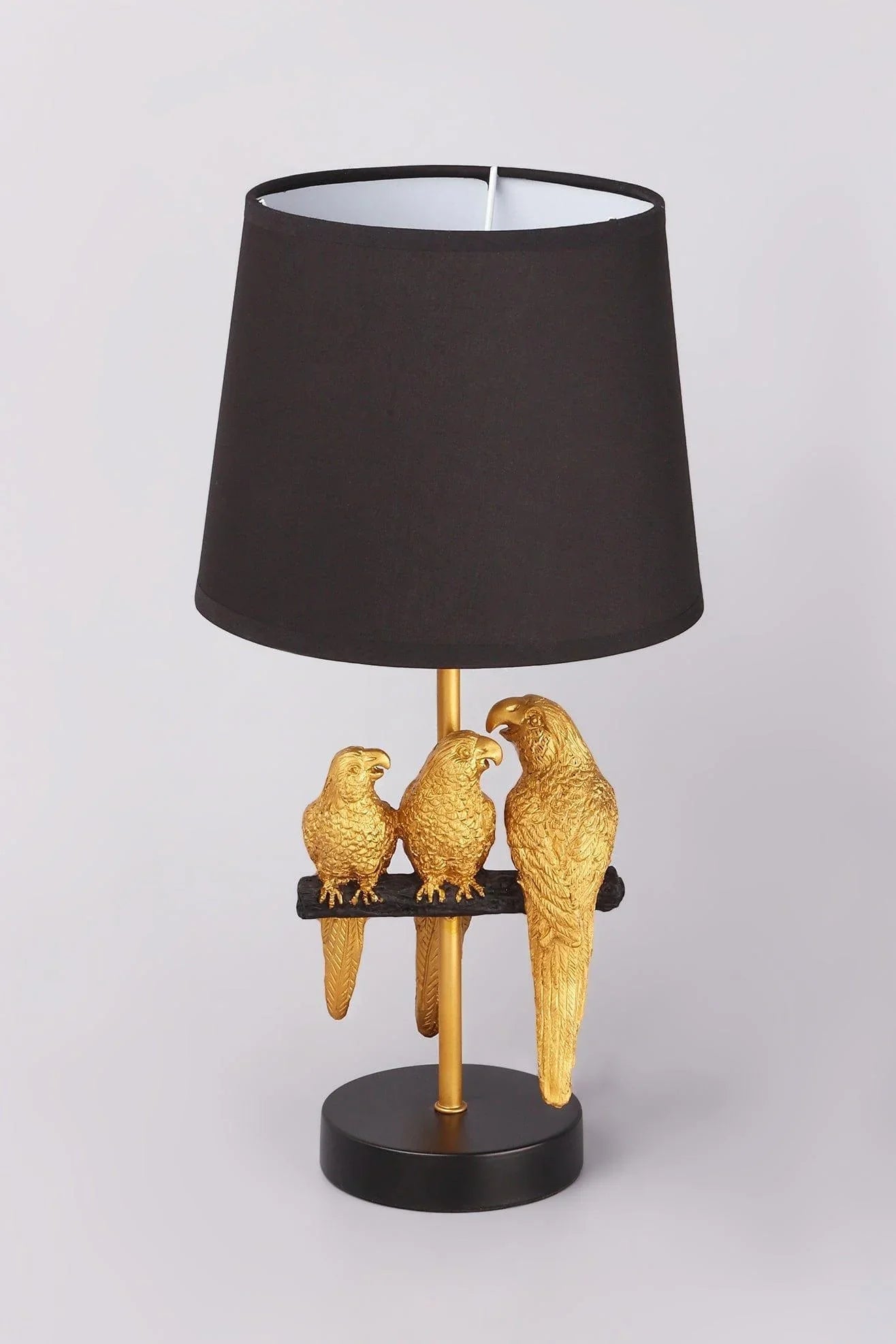
The material of the shade matters as much as the shape. A linen or paper shade glows warmly and softens light; a black or dark-lined shade throws a tighter, more theatrical beam and reads as architecture. For most rooms a warm linen shade is the kinder choice, with a darker shade reserved for the study or a dramatic hallway.
Bulbs, warmth and the question of lumens
The bulb is the unsung half of a lamp. A beautiful lamp fitted with the wrong bulb is a beautiful lamp wasted. Two numbers do most of the work here: colour temperature and lumens.
Colour temperature is measured in kelvin and describes whether the light is warm (lower numbers) or cool (higher numbers). For a domestic interior, 2700 K is the warm, candle-adjacent setting that flatters skin, wood, brass and most upholstery; 3000 K is a touch crisper and useful in a kitchen or study where some clarity is wanted. Anything above 3500 K reads as office light and has no place beside a sofa. If only one number stays in the mind from this guide, let it be 2700 K.
Lumens are the measure of actual brightness, and most domestic table lamps want between 400 and 800 lumens — enough to read by, not so much that the room squints. A bedside lamp wants the lower end; a working desk lamp the higher. Dimmable bulbs are worth every penny of their small premium, because the same lamp serves an afternoon and an evening with the turn of a wheel.
Avoid the cheapest bulbs. A poor LED renders colours flatly, makes upholstery look grey, and undoes whatever the lamp itself was meant to achieve. A CRI (colour rendering index) of 90 or above is the threshold to look for, printed in small type on the better packaging.
Lamps as sculpture, and the case for character
Beyond the practical job of throwing light, a table lamp is a piece of sculpture that happens to switch on. Off as well as on, it occupies a surface; in daylight it is part of the still life on a console or sideboard. The base, in this sense, has to earn its place even when the room is full of sun.
Our signature pieces are chosen with this in mind — lamps and lit objects that read as character pieces during the day and as warm anchors in the evening. A turned wooden base, a hand-thrown ceramic, a hammered brass column, a sculpted figure cast in stoneware: each becomes part of the architecture of a room rather than disappearing into it. Treated as a small piece of sculpture, the lamp pays back twice, once in light and once in form.
The instinct to mix is right. A run of identical lamps along a long room looks ordered and a little airless; one tall ceramic at the end of a sideboard, one low brass column on a side table, one painted base by the bed reads as a collected interior. The pieces speak to one another without matching, and the room feels lived in rather than installed.
Layering lamps with the rest of the light
A table lamp rarely works alone. It belongs to a wider plan of light — the rule of three sources, applied properly. Overhead light is for cleaning and chopping and the moment of arrival; lamps are for everything afterwards. A good evening scheme has at least one floor lamp, two or three table lamps, and perhaps a wall sconce or two — never the central pendant, unless on a dimmer pulled almost to zero.
The trick is height. Light at three different heights — floor, mid, and shelf — gives a room dimension. A floor lamp behind a chair throws a tall warm pool; a table lamp on a side table throws a mid-level glow; a small lamp on a bookshelf or mantel adds the third note. Together they describe a volume of warmth that no overhead fitting on its own ever achieves.
Care, longevity and the quiet life of a good lamp
A well-made lamp asks for very little. Dust the shade gently with a soft brush every few weeks — a paint brush kept for the purpose works well — and wipe the base with a clean, dry cloth. Avoid wet cloths on metal bases, particularly antique brass and unlacquered finishes, which prefer to age gently with handling.
Replace bulbs in pairs where lamps are matched; an aged bulb beside a new one casts light of subtly different temperatures and the eye reads the difference even when the mind does not. Check the flex periodically and have it rewired by a qualified electrician if the cable shows wear — a properly cared-for lamp will outlast several pieces of upholstery beneath it.
Building a lighting scheme that lasts
A considered home is not lit by a single grand gesture but by several small ones, accumulated over time. A pair of bedside lamps. A console lamp by the door. One on the sideboard. Another on a side table by the reading chair. A small one on a bookshelf or mantel. Six points of light, all switched on at dusk, and the house becomes the place it was always meant to be.
Build the scheme slowly. Begin with the rooms most lived in — the bedside and the sitting room — and add as the year turns. Buy bases that will survive a change of upholstery and shades that can be replaced if a colour scheme shifts. Choose bulbs once, carefully, and stay with them.
Begin with our lighting edit and the wider signature pieces range, alongside the home décor collection for the surfaces that lamps live on. A well-chosen lamp is one of the quietest and most useful pieces of furniture a home can own — sculpture by day, atmosphere by night.
Frequently asked questions
How tall should a table lamp be?
A reliable rule of proportion is that a table lamp wants to be roughly two-thirds the height of the surface it stands on, measured from the floor. A console at around 80 cm comfortably carries a lamp of 50 to 55 cm, while a bedside cabinet at 60 cm suits a lamp of around 40 cm. The lower edge of the shade should sit at roughly the height of a seated person's eye, which on most sofas and beds falls around 100 to 110 cm from the floor — high enough that the bulb itself is never seen from where one sits.
What bulb should I use in a table lamp?
For most domestic rooms, choose a warm bulb at 2700 K, dimmable, with a colour rendering index of 90 or above. Lumen output between 400 and 800 covers almost every table-lamp setting — the lower end for bedside, the higher for reading or working. Avoid cool white bulbs above 3500 K, which read as office light and flatten the colours of wood, brass and upholstery. A good bulb is the unsung half of a beautiful lamp.
Do table lamps need to match?
Bedside lamps almost always look best as a pair, though they need not be identical — matched in scale and material is enough. Elsewhere in the home, mixing reads as more collected and less installed. One tall ceramic base on a sideboard, one low brass column on a side table, one painted lamp by a reading chair will look composed if they share a thread of palette or material. A run of identical lamps through a single room tends to feel airless rather than considered.
How many lamps does a room need?
The working rule is that every room wants at least three sources of light, ideally at three different heights and rarely all on the ceiling. A sitting room is well served by a floor lamp, two table lamps and perhaps a small lamp on a bookshelf or mantel; a bedroom by a pair of bedside lamps and a third light source — a floor lamp by a chair, or a small lamp on a chest of drawers. Overhead light is for cleaning; lamps are for living.
Where should I place a table lamp in a hallway?
A hallway lamp belongs on a console, set slightly off-centre rather than dead centre, with a small grouping of objects beside it — a bowl for keys, a stack of books, a planted vessel. The shade should sit at roughly eye height for a person standing, and the bulb warm enough to soften the wall behind. A single tall lamp is almost always better than two smaller ones; the hallway lamp is the welcome of a house and deserves a confident piece rather than a timid pair.
A final thought
A table lamp is one of the quietest pieces of furniture in a home and one of the most consequential. Chosen properly, it does the slow work of turning a house into an evening — anchoring a console, warming a corner, lighting a book without flooding a room. The rules of scale and bulb and shade are simple enough to follow, but the pleasure of getting them right is felt every night, in the moment between switching on the lamp and sitting down.
Begin with our lighting edit and the wider home décor range. With more than 700 verified reviews on Trustpilot and over 2,000 store reviews on Judge.me, our pieces are trusted in homes across the UK, US, Europe and Australia.
Further reading
- The Mantelpiece: How to Style One Without Cluttering — Where a low lamp does its best work.
- How to Style a Sideboard: A Designer's Guide — The rule of three, applied to a whole surface.