

The Journal · British Design
Planter Styling for the Considered Home
A designer's guide to planter styling — how to choose a planter for the room as much as the plant, get proportion and grouping right, place sculptural pieces well, and care for both plant and pot so a home feels considered and alive.
Why do some homes feel alive the moment you step inside, while others, just as carefully furnished, feel a little held-breath and still? Often it comes down to plants — and to the planter they sit in. A considered planter is the difference between a pot of greenery and a piece of the room; it is where a plant stops being maintenance and starts being decoration.
Why the planter matters as much as the plant
It is easy to lavish thought on a plant and none at all on the vessel that holds it, and the result is the plastic nursery pot left exactly where the garden centre put it. A good planter does for a plant what a good frame does for a picture: it settles it into the room, gives it weight, and tells the eye that this was a choice rather than an accident. The plant supplies the life; the planter supplies the intention.
The encouraging part is that planter styling asks for very little once you understand a few principles. It is not about owning many plants, but about placing a considered few in vessels that suit them, the room, and one another. This guide sets out how.
Choosing a planter for the room, not just the plant
The most common mistake is to choose a planter for the plant alone and forget the room it will live in. A vessel has to answer to both. A pared-back, modern interior is flattered by clean architectural forms — a tall monochrome shape such as the Linea Atelier ceramic vase reads as sculpture against a plain wall. A warmer, more characterful home can carry a sculptural planter with personality, the kind that becomes a talking point on a shelf.
Match the planter's temperature to the room's. Cool stone, cement, and monochrome ceramics suit calm, contemporary spaces; warm terracotta, hand-painted glazes, and natural woven fibres belong in country and cottage interiors. When the vessel speaks the same language as the room, the plant looks as though it grew there.
Form, scale and proportion
A planter and its plant should look in proportion: roughly speaking, the vessel wants to be about a third of the total height of the planted arrangement, so neither overwhelms the other. A trailing plant is generous from height, so it suits a tall planter, a shelf, or a hanging form such as the handwoven cone hanging planter, which draws the eye upward and softens a hard corner. An upright, structural plant — a sansevieria, a small olive — wants a heavier, grounded vessel that can hold its own beneath it.
Scale is where most planter styling goes quietly wrong. One large planter with a single confident plant almost always reads better than three small pots scattered along a windowsill. When in doubt, go larger and fewer. A single substantial vessel from the planters and vases edit anchors a corner in a way a cluster of little pots never will.
The art of grouping
Plants, like most objects, look best in considered groups rather than dotted evenly about. The reliable rule is the rule of odds: group in threes or fives rather than twos or fours, and vary the height within the group so the eye travels up and down rather than across a flat line.
A good grouping mixes heights and forms but holds to a thread — a shared material, a shared palette, or a repeated shape. Three planters in the same glaze but different sizes will always look composed; three in wildly different styles will look like a collection of leftovers. Let one piece lead and the others support it, much as you would in any still life.
Planters with personality
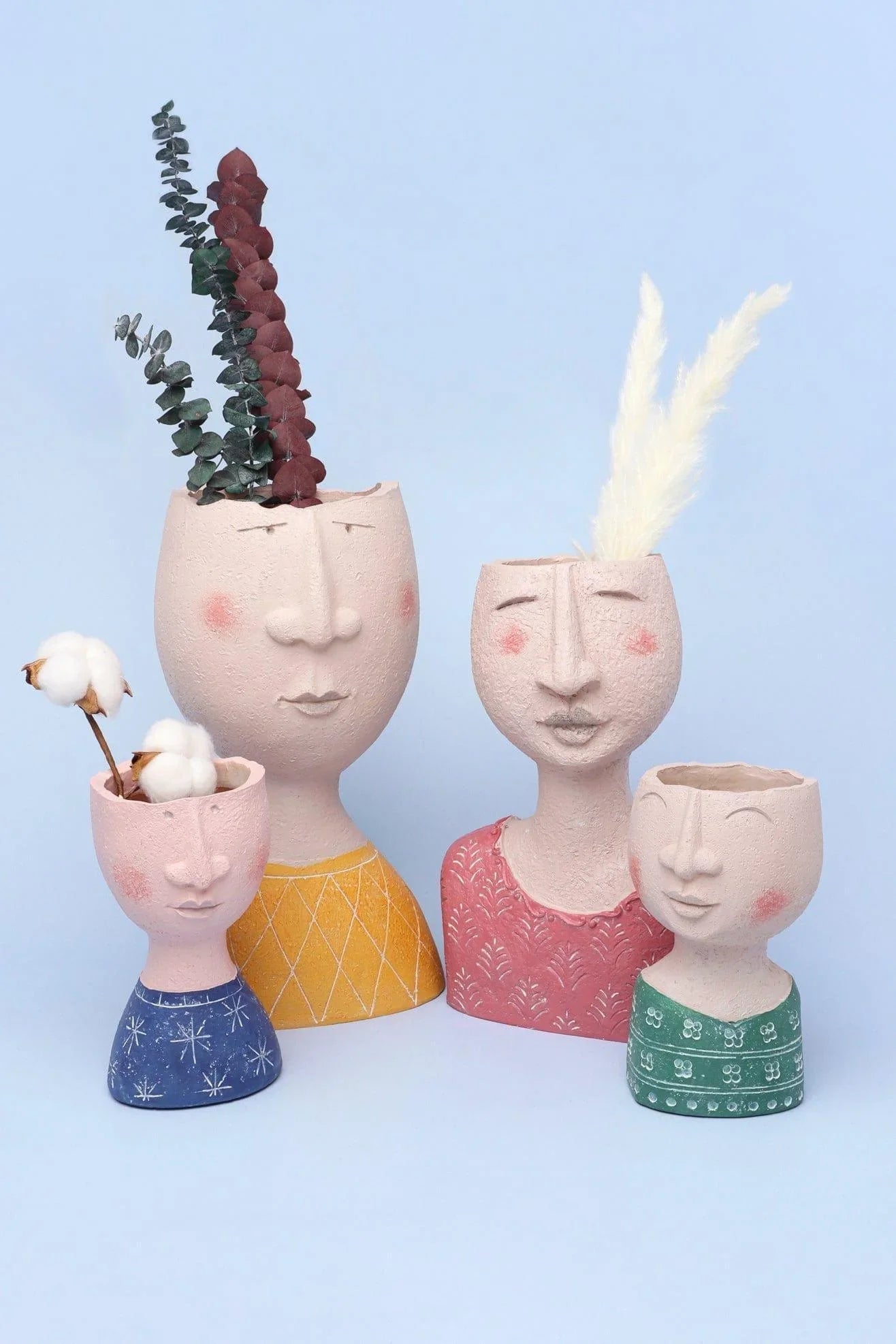
Not every planter needs to disappear into the scheme. The right sculptural piece becomes a small character in a room — a face, a figure, an unexpected form that rewards a second look. Our Familia sculpted face planter and vase collection is exactly this kind of piece: planted with a soft trailing green, it reads as part-vessel, part-sculpture, the sort of thing a guest notices and remembers.
Pieces like these work best given room to be seen — a mantel, a bookshelf, a console — rather than crowded among other strong shapes. One sculptural planter per sightline is plenty; a second competes. Treated as you would a piece of art, a characterful planter from the wider home décor range earns a place that has nothing to do with the plant it holds.
Vases, and the planter's close cousin
A vase is a planter's natural companion, and the line between the two is happily blurred. Many of the most useful vessels do both jobs — a stem of eucalyptus one week, a planted fern the next. A handmade glass vase such as the Stella Verde ribbed green glass vase brings colour and texture even before anything is put in it, and a few good vases let a home follow the seasons: branches and bare stems in winter, blossom in spring, full blooms in summer.
Keep a small edit of vases in different heights and mouths — a tall one for branches, a low wide one for a generous bunch, a bud vase for a single stem — and a home is never short of a way to mark the week. The planters and vases edit is built to be collected exactly this way, a few versatile pieces that earn their keep year round.
Caring for plants and their planters
A beautiful planter is only as good as the plant's health, and the commonest killer of indoor plants is drainage — or the lack of it. Decorative planters often have no drainage hole, which is fine provided you keep the plant in its plastic nursery pot and lift it out to water, letting it drain fully before returning it. This way the handsome vessel stays dry and the roots never sit in water.
Wipe ceramic and glass vessels now and then to keep glazes bright, and turn planted pots occasionally so growth stays even. A well-kept planter, like any hand-finished piece, ages gracefully and rewards the small attention it asks for.
Building a planter collection that lasts
A considered home does not need many planters; it needs a few good ones, chosen for different jobs. One large statement vessel to anchor a corner. A sculptural piece with personality for a shelf or mantel. A hanging form to bring green up high. And a small edit of vases for cut stems through the seasons. With those, a home has everything it needs to feel planted and alive without ever looking cluttered.
Choose pieces that hold their own empty as well as planted, since a good vessel is decoration in its own right. The planters and vases edit, alongside our signature pieces, is made to be collected slowly and lived with — each one hand-finished to be as good to look at bare as it is in bloom. A planter, chosen well, is the quietest way to bring a room to life.
Frequently asked questions
How do I choose the right planter for a plant?
Choose for both the plant and the room. As a rule of proportion, the vessel wants to be about a third of the total height of the planted arrangement. Trailing plants suit tall or hanging planters; upright, structural plants want a heavier, grounded vessel. Then match the planter's material and colour to the room, so cool ceramics sit in contemporary spaces and warm glazes or woven fibres in country ones.
How many plants should I group together?
Group in odd numbers — threes or fives rather than twos or fours — and vary the height within the group so the eye travels up and down. Hold the grouping together with a shared thread, such as a single glaze, palette, or repeated shape, and let one piece lead while the others support it. Odd-numbered, varied groupings almost always read as composed.
Do decorative planters need drainage holes?
Not necessarily. Many decorative planters have no drainage hole, which is fine if you keep the plant in its plastic nursery pot, lift it out to water, and let it drain fully before returning it. This keeps the handsome vessel dry and stops the roots sitting in water, which is the most common cause of an unhealthy indoor plant.
What is the difference between a planter and a vase?
A planter holds a living, growing plant, usually in soil; a vase holds cut stems or flowers in water. In practice the line blurs, and many of the best vessels do both jobs across the seasons — a planted fern one month, a branch of blossom the next. A small edit of versatile pieces in different heights covers both needs.
Where should I place a sculptural planter?
Give a sculptural planter room to be seen — a mantel, a bookshelf, a console — rather than crowding it among other strong shapes. Treat it as you would a piece of art: one characterful planter per sightline is plenty, and a second nearby tends to compete. The plant becomes secondary; the vessel is the point.
A final thought
Planter styling is one of the simplest ways to make a home feel considered and alive. Choose the vessel for the room as much as the plant, keep to odd-numbered groups and honest proportions, give your sculptural pieces room to breathe, and look after both plant and pot. A well-chosen planter does quiet, constant work — bringing the life of a plant into the language of the room.
Begin with our planters and vases edit and the wider home décor range. With more than 700 verified reviews on Trustpilot and over 2,000 store reviews on Judge.me, our pieces are trusted in homes across the UK, US, Europe and Australia.
Further reading
- How to Style a Sideboard: A Designer's Guide — The rule of three, applied to a whole surface.
- A Hallway with Character — Where a single planter can make the welcome.
- The Quiet Confidence of British Design — On pieces made to be lived with.