


The Journal · brass hardware
Cabinet Hardware: The Detail That Defines a Kitchen
Why interior designers spec the cabinet hardware before the cabinetry itself. The signature detail that decides whether a kitchen reads as considered or anonymous. From G Decor.
G · Stories · No. IV · Home & Hardware
A G Decor Guide
Question: why do interior designers spec the cabinet hardware before they spec the cabinetry itself? Because a kitchen lives at the level of the hand. The doors, the drawers, the corner cupboard you open ten times a day — what they're wearing on the front is what defines the kitchen. Everything else is supporting cast.
This is a designer's note on why cabinet hardware is the detail that decides whether a kitchen reads as considered or anonymous. The materials, the forms, and the small choices that mark the difference between a kitchen someone designed and a kitchen someone installed.
Hardware is the part the eye lands on
Cabinets are large, flat surfaces — designed to recede into the architecture of the room. The hardware is what catches the light, what the hand touches, what the eye reads first. A run of solid brass cabinet pulls across an island reads as an intentional design statement long before the worktop or the splashback do.
Which means the hardware carries the weight of the kitchen's first impression. A new-build kitchen with anonymous chrome cube knobs reads as anonymous, regardless of what was spent on the cabinetry. An older kitchen with hand-painted ceramic on a brass base reads as considered, regardless of how recent the cabinetry is.
The signature detail
Hardware is the signature. It's the equivalent of a watch on a well-tailored suit — the small detail that signals attention and intention beyond the obvious. The pieces have weight in the hand. The patina ages with the room. The small variations between hand-painted pieces give the kitchen a depth that uniform machine-stamped hardware never achieves.
This is why every considered kitchen, from a Belgravia townhouse to a Cotswold farmhouse, makes the same choice: the hardware comes from a small workshop, gets finished by hand, and ages alongside the room rather than against it.
Knob or pull — choose by drawer
The most common kitchen hardware decision is whether to use knobs or pulls. The honest answer: both, in the right places.
- Cabinet doors: Knobs. They sit at eye level, get touched lightly, and read as decorative.
- Drawers: Pulls. The two-handed grip on a drawer wants something to hook fingers under. Knobs on heavy drawers are an ergonomic mistake.
- Pantry or larder doors: Pulls. Larger surface, opens with force, deserves a longer pull.
- Glass-fronted cabinets: Knobs. The smaller hardware doesn't compete with what's behind the glass.
The all-knobs or all-pulls approach is the showroom move. The mixed approach is the designer move — and it's almost always the right one in a kitchen.
Browse our cabinet knobs and cabinet pulls — designed in matching finishes so the kitchen reads as one design even with two forms. Or shop by material: ceramic, brass, glass, mother of pearl, or our designer signature pieces.
Material choice for kitchens specifically
Kitchens have one constraint other rooms don't: heat, water, grease, fingerprints. The material has to look beautiful and survive being next to the hob.
Solid brass
The kitchen-favourite finish for warm, classic interiors. Solid brass develops a patina over time which actually helps it look better as the kitchen ages. Pairs beautifully with timber cabinetry, cream and sage paint, and natural stone worktops. Our Mughal Brass cabinet knob in lattice, hammered or dotted patterns is a workhorse for considered kitchens. Explore the full brass cabinet knobs collection.
Hand-painted ceramic on brass
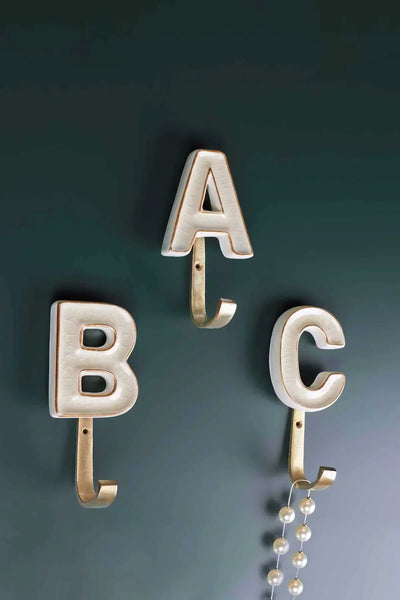
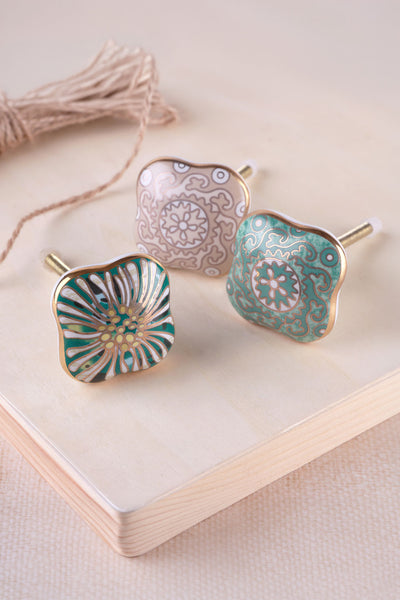
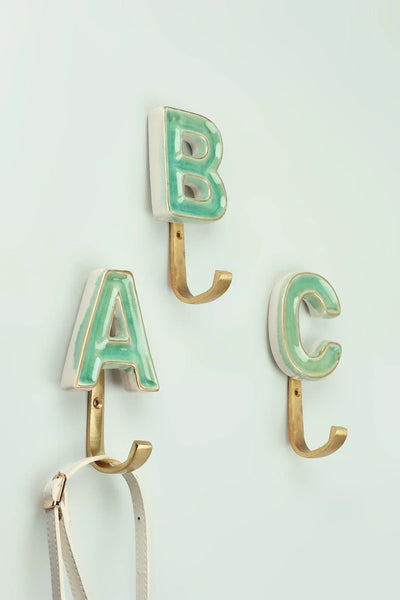
The signature choice for kitchens that want personality without overstatement. A hand-painted ceramic top on a solid brass base brings colour and pattern at a small scale. Use a single colour across all the cabinets for cohesion, or mix two related colours for a more collected look. Browse the ceramic cabinet knobs collection for florals, monograms, polka dots and Wedgwood-inspired blues.
Polished chrome and nickel
The choice for cool, modern kitchens with handleless cabinetry, marble or quartz worktops, and matte black appliances. Chrome and polished nickel echo the cool surfaces and read as architectural rather than decorative.
Antique brass
For period kitchens or new kitchens that want to feel established. The darker, warmer tone reads as lived-in and considered — the brass that looks like it has been there for a generation.
Glass, mother of pearl, and inlay
Beyond the metal-and-ceramic mainstream, glass and mother-of-pearl offer something quieter. Faceted crystal and frosted glass catch the light in a way metal can't — beautiful for modern kitchens with marble or quartz worktops. Mother of pearl inlay set into polished brass reads as quietly luxurious — a heritage detail for considered cabinetry. Browse glass cabinet knobs for crystal-cut, frosted and jewel-toned designs, or the designer cabinet knobs edit for our signature curated pieces.
The mix-and-match strategies that work
Three approaches, in order of how often they work:
- One finish, two forms. All brass: knobs on the doors, pulls on the drawers. Same metal everywhere, two shapes for ergonomics. The most common designer move.
- One form, two finishes. All knobs: ceramic on the base cabinets, brass on the wall units. Adds quiet contrast without breaking the unity.
- Plain everything except one feature. Plain brass pulls throughout, then a row of patterned ceramic knobs on the kitchen island or larder cupboard. The one feature does all the personality work.
Sizing in the kitchen
Kitchen hardware is generally larger than bedroom or bathroom hardware because the cabinets are larger and the hardware needs to be visible from across the room.
- Standard cabinet knobs: 30–40 mm diameter for most doors. Larger feels chunky in a small kitchen; smaller feels lost on a wide door.
- Cabinet pulls: 96–160 mm centre-to-centre for drawers. Wider drawers can take longer pulls, sometimes 224 mm or more on island fronts.
- Pantry pulls: 200 mm+ on tall larder doors. The hardware should look proportional to the door it lives on.
If you're replacing existing hardware, measure the screw-hole spacing on the back of the drawer first. Standard pull centres are 96 mm, 128 mm, and 160 mm — matching the existing spacing means a clean swap.
The mistakes
A few things to avoid:
- Plastic-coated knobs that look like ceramic. Chip on first contact, scratch under nails, fade in sunlight. Real ceramic costs barely more and lasts decades longer.
- Hardware in three different finishes. Brass + chrome + black-iron in the same kitchen reads as undecided. Pick a primary metal and commit.
- Over-decorative knobs in a small kitchen. Twelve patterned ceramic knobs in a galley overwhelm the space. Save the pattern for one or two feature cupboards and use plain hardware for the rest.
- Matching the kitchen hardware to the bathroom hardware. Different rooms, different decisions. Don't extend the kitchen finish to the rest of the house just because it works there.
The designer's order of operations
If you're working through the kitchen properly:
- Decide the primary finish first — brass, polished chrome, antique brass, or polished nickel. This sets everything that follows.
- Choose knobs vs pulls by drawer type. Knobs on doors, pulls on drawers, larger pulls on pantry.
- Pick the ceramic or metal pattern that complements the cabinetry. Quiet pattern in busy kitchens, statement pattern in restrained kitchens.
- Measure existing screw-hole centres if replacing, so the new hardware fits without drilling.
- Order one piece first to check the look against the actual cabinetry before committing to the whole kitchen.
- Replace the full set in one session so the kitchen comes together as a finished design rather than a piecemeal upgrade.
Frequently asked questions
How many cabinet pulls or knobs does a typical UK kitchen need?
Most UK kitchens have between 12 and 25 pieces of hardware. Count separately: base cabinet doors, wall cabinet doors, drawers, larder, island. Order two extra of whatever you choose — you'll want spares.
Can cabinet hardware be replaced without drilling new holes?
Yes, if the new hardware matches the existing screw-hole spacing. Cabinet knobs use a single screw hole; cabinet pulls have two holes at standard centres (96, 128, 160 mm). Match the spacing and it's a screwdriver change.
What's the most considered kitchen hardware finish?
Solid brass and antique brass have led recent years for warm, classic kitchens — country, shaker, traditional. Polished chrome and nickel are still the choice for modern, handleless kitchens. Hand-painted ceramic on brass remains the choice for kitchens that want personality.
Should kitchen cabinet hardware match the appliances?
Not strictly. Brass hardware works fine with stainless steel appliances if there's another brass element nearby (a tap, a pendant light). The hardware should match something in the room, but it doesn't have to match the appliances themselves.
Is it worth changing hardware in a kitchen we're planning to renovate?
If the renovation is more than 12 months away, yes. Considered hardware changes the kitchen immediately and you'll have a year of enjoyment before the renovation. Many planned renovations get postponed once the hardware has done the design work.
A final note
The kitchens that read as considered almost always have considered hardware. It's the detail the eye lands on, the part the hand touches every day, the surface that ages alongside the room. Choosing it well is what separates a kitchen someone installed from a kitchen someone designed.
Browse G Decor's cabinet knobs — including specialised collections in ceramic, brass, glass, mother of pearl and our designer signature pieces. Or explore cabinet pulls and our full cabinet hardware range. With more than 700 verified reviews on Trustpilot and over 2,000 store reviews on Judge.me, our hardware is trusted in homes across the UK, US, Europe and Australia.
Further reading
- Cabinet Pulls vs Cabinet Knobs: A UK Guide to Choosing the Right Hardware — Knobs or pulls? A UK guide by room, by drawer size, by style. With sizing rules and finish pairings.
- How to Choose Cabinet Knobs: A Complete UK Guide — Material, finish, sizing, placement — the small details that turn a kitchen from installed into designed.
- How to Style a Sideboard: A Designer's Guide — The rule of three, the four-layer system, room-by-room ideas — a sideboard that lasts seasons not weeks.