



The Journal · British Design
A Guide to Scented Candles: Fragrance Families, Burn Time, Ceremony
A designer's guide to scented candles — fragrance families, wax types, burn time, and the small ceremony of lighting a candle in different rooms of the home.
A candle is the smallest piece of theatre in a home. Strike a match at six in the evening, and a room you have been living in all day quietly changes character.
Why a scented candle matters as much as the flowers in the hallway
Scent is the furnishing that no photograph can ever quite show. It is felt before it is seen, registered by some quieter sense than the eye, and remembered long after the lamps have been switched off. A house with one good candle burning in the right room is a house that has been thought about in three dimensions rather than two. The fragrance is the unseen half of the decoration.
Most homes carry several candles — a few on a console, one on the dressing table, one beside the bath — and not all of them are lit on the same evening. A considered collection of scented candles works the way a wardrobe works: a small set of pieces, chosen well, mixed and matched to suit the day. A heavy oud for a winter dinner. A bright lemongrass for a summer afternoon. A soft tuberose for a Sunday bath. The candle is not the room's fragrance but its mood.
Choosing them well asks for a little knowledge — the fragrance families, the wax, the burn, the placement — and then the kind of attention that turns a small object into a small ceremony. This guide sets out the first half. The second half belongs to the evening you light it.
The five fragrance families, and what each one does in a room
Perfumers organise scents into families, and the same shorthand serves candles. Five families cover almost everything worth burning at home, and learning their characters is the first step to choosing them well.
Floral candles are the most generous — rose, peony, tuberose, jasmine, lily of the valley. They lift a room without darkening it, which makes them the right note for a bedroom, a bathroom, or a sitting room in spring. A good floral is never sickly; it is the smell of the flower itself, recognised at a glance. Floral candles work best in light, airy rooms where they can drift rather than settle.
Woody candles are the deepest — cedar, sandalwood, oud, vetiver, cypress. They warm a room and give it weight, which makes them right for a study, a library, or a sitting room in winter. Woody scents have presence without sweetness, and they read as classic and unisex in a way that florals sometimes do not. A single woody candle in a wood-panelled room is one of the surer pleasures of domestic design.
Oriental candles — sometimes called amber or spicy — are the most theatrical: incense, amber, leather, tobacco, saffron. They belong in the evening, in dining rooms and hallways and the kind of sitting room that wants atmosphere rather than freshness. Oriental candles tell a room it is for adults, and they pair beautifully with low candles burning together.
Fresh candles are the lightest — citrus, sea salt, herbs, green leaves, fig leaf. They behave a little like opening a window: they freshen rather than scent, which makes them right for a kitchen, a bathroom on a summer morning, or any room that has been closed up for too long. Fresh notes also work for a working study, where heavier scents would close the air down.
Gourmand candles — vanilla, almond, coffee, caramel, fig — are the easiest to like and the easiest to overdo. A gourmand candle in a hallway in November is genuinely welcoming; a gourmand candle on a dining table during the meal is an interference. Used carefully, they are warm; used heavily, they are saccharine. Reserve them for the periphery of the meal, not its centre.
Wax: what it is made of, and why that matters
The wax is the body of the candle, and it does more than hold the wick. It determines how cleanly the candle burns, how true the fragrance reads, and how long the thing lasts. Four waxes account for almost everything on the market, and each tells a slightly different story.
Soy wax is the most common modern choice — derived from soybeans, vegetable-based, slow-burning, and clean. A good soy candle throws fragrance gently rather than aggressively, which suits floral and fresh families particularly well. Soy is forgiving in the cold and can develop a slight frosting on the surface, which is a sign of the wax and not a fault. Most of the better contemporary scented candles are soy or a soy blend.
Coconut wax, sometimes blended with soy, burns even more cleanly and carries fragrance with great fidelity — the scent in the jar smells almost identical to the scent in the room. It is more expensive than soy and used by many of the considered fragrance houses. A coconut-blend candle is one of the small luxuries that pays for itself in the truth of the scent.
Beeswax is the oldest — honey-coloured, faintly sweet on its own, and producing a warmer, more golden flame than other waxes. Beeswax is wonderful in unscented or lightly scented candles and pairs beautifully with woody and oriental notes. It is also the longest-burning of the natural waxes. Beeswax candles do not need to be fragranced to add atmosphere; the wax itself smells faintly of summer.
Paraffin is the traditional supermarket wax — cheap, effective, and the strongest scent-thrower of all four. The objection to it is environmental rather than aesthetic, and many of the great heritage fragrance houses still use paraffin or paraffin blends. A high-quality paraffin candle from a serious maker is not a thing to be ashamed of; a low-quality one is.
How to read a burn, and why the first burn matters most
A candle has a memory. The first time it is lit determines how it will burn for the rest of its life, which is one of the small unromantic facts that improves the romance of the thing once known. The melted pool of wax on the surface, after this first burn, sets the maximum diameter to which the candle will melt thereafter — and if the candle is extinguished before the pool reaches the edges of the vessel, it will tunnel forever down the middle, leaving wax on the sides and wasting half the candle.
The rule, then: on the first burn, leave the candle lit until the wax has melted edge to edge. For most home candles, this takes two to three hours; for a very wide vessel, longer. Plan the first lighting for an evening you intend to be at home. After that, the candle is forgiving, and a quick half-hour burn at the end of a Tuesday does no harm.
Trim the wick before every lighting — ideally to about 5 mm, using small scissors kept for the purpose. A long wick smokes, blackens the glass, and burns hotter than the fragrance can keep up with. A trimmed wick burns cleanly, gives a steady flame, and lets the scent throw evenly. The single most reliable predictor of a candle's life span is whether the owner trims the wick.
Burn time matters. Most quality candles burn for 40 to 60 hours; the best, in heavier vessels, for 80 or more. Burn in two- to three-hour sessions, no longer than four — beyond that, the wax overheats, the scent degrades, and the wick begins to mushroom. A candle treated kindly will last twice as long as one burned in marathon sessions.
Scenting by room, and the question of when to layer
Different rooms ask for different scents, and the temptation to scent every room with the same candle is the temptation that turns a home into a hotel lobby. A house is more interesting when each room has a slightly different character of air.
The hallway wants the most welcoming and the most generous scent — a fig, a tomato leaf in summer, an amber or fir in winter. It is the first impression of the house, and a candle here greets a guest before they have even seen the sitting room.
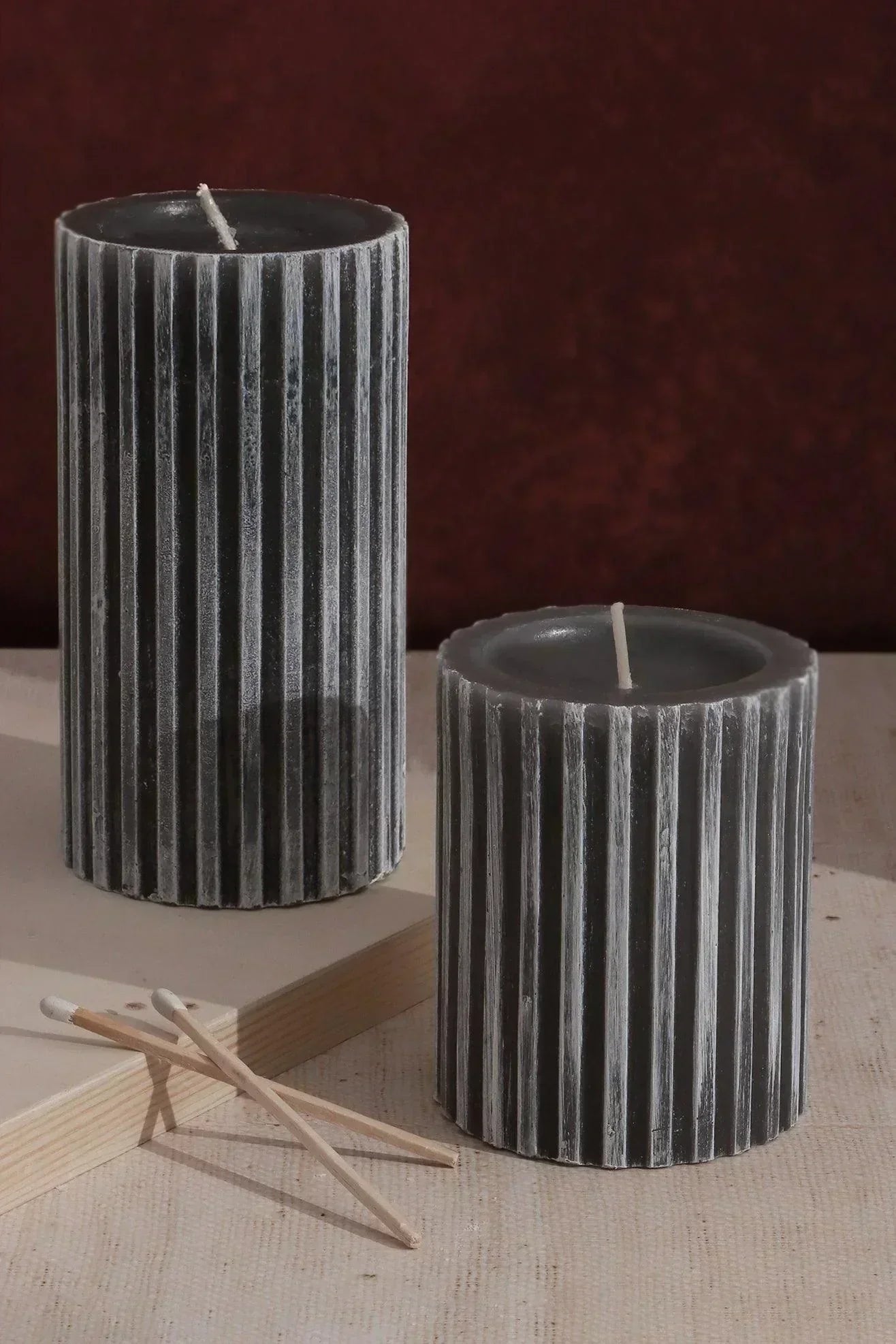
The sitting room wants something that holds for an evening without overpowering conversation — a softer floral, a light woody, or a fresh herbaceous. Avoid heavy gourmands here; they fight with food smells from the kitchen and dominate the air. A pair of low candles in beautiful candle holders on a console table is often more atmospheric than one large scented vessel.
The dining room wants almost nothing. Heavy fragrance interferes with food, which is itself a kind of perfume on the table. Light unscented dinner candles for the meal, and bring a more strongly scented candle into the room half an hour before guests arrive — then carry it elsewhere when the meal begins.
The bath is the most forgiving room for scent. Steam carries fragrance, water amplifies it, and the closed door holds the atmosphere. Tuberose, jasmine, eucalyptus, rosemary — anything you might find in a spa. The bath is the one room where a strongly scented candle can be used at its full strength.
The study or library wants something steady and considered — cedar, sandalwood, tobacco, leather, fig. Scents that do not distract, that read as classic, that settle a person into a chair rather than lifting them out of it.
Layering scents — burning two candles together — is a sophisticated game and works only between families that already speak to one another. A woody and an oriental will marry; a floral and a woody can; a gourmand and a fresh almost never. When in doubt, one candle is enough. A room overscented is a room less, not more.
Seasonality, and the candles of the year
The right candle for January is not the right candle for July. Heavy oriental and woody notes warm a winter room, the way a cashmere throw warms a sofa; light florals and fresh citrus open a summer one, the way a cotton sheet feels in August. To burn the same fig-and-amber candle in February and in August is to dress the house in the same coat all year.
A small seasonal rotation of three or four candles is enough. One warm and resinous for autumn and winter. One bright and herbaceous for spring. One fresh and citric for summer. One floral that crosses the seasons, for any month. The wider home fragrance edit is meant to be collected slowly in this way — not as a single purchase but as a small library, drawn on according to month and mood.
Candle holders and the still life around the flame
A scented candle in a beautiful vessel is part of the room's still life. A scented candle in its shipping carton is not. The same fragrance, presented well, reads as decoration; presented carelessly, as housekeeping. The vessel matters.
Most quality candles arrive in considered glass or ceramic vessels that need no further presentation — set them on a tray, on a stack of books, on a small dish. Once the candle is finished, the vessel itself often has a second life: a vase for a single stem, a holder for matches, a small planter, a brush pot on a desk. A well-designed candle gives the room twice. For pillars and tapers, the choice of candle holders is itself part of the styling. A pair of brass or marble holders on a sideboard transforms an ordinary dinner candle into a moment.
Care, storage and the small ritual of trimming
A candle responds to small attentions. Keep wicks trimmed to 5 mm before every burn, with sharp scissors or a purpose-made trimmer; never with fingers. Allow the wax to pool edge to edge on every burn, particularly the first. Extinguish with a snuffer or by gently pressing the wick into the wax with the back of a spoon — blowing out a candle scatters smoke and risks dispersing molten wax. After extinguishing, recentre the wick so it stands upright for the next burn.
Store unburned candles away from direct sunlight, which fades dyes and warps wax. A drawer or cupboard is ideal. Keep candles out of draughts when lit — a steady flame burns more evenly than a flickering one, and the scent throws better when the air is still.
Building a fragrance collection that lasts
A considered home does not need many candles; it needs the right ones, well kept and rotated by season. Three or four scented candles — one warm, one fresh, one floral, one woody — will cover almost any evening of any year. Add a pair of beautiful holders for unscented dinner candles, and a single resin or wood-based fragrance for the colder months, and the house is dressed in scent for any occasion.
Buy slowly. Better one excellent candle that you light with attention than six adequate ones that gather dust. A good scented candle pays back in atmosphere every evening it is lit, and the small ceremony of striking the match, watching the flame settle, smelling the first faint drift of fragrance — this is one of the quieter and most reliable pleasures a home can offer.
Begin with our scented candles edit and the wider home fragrance range, alongside the candles collection and the considered candle holders that hold them. A house in good scent is a house that has been thought about.
Frequently asked questions
How long should I burn a scented candle for the first time?
Burn a new scented candle until the wax has melted edge to edge across the surface of the vessel, which usually takes two to three hours for a standard candle and longer for a wider one. This first burn sets the candle's memory: every subsequent burn will only melt the wax to that diameter. If extinguished before the wax reaches the edges, the candle will tunnel down the middle and leave wax on the sides, wasting much of its burn time. Plan the first lighting for an evening at home.
What is the best wax for a scented candle?
Soy and coconut waxes are the kindest choices for most modern homes — clean-burning, slow, and faithful to the fragrance. Coconut blends carry scent with particular accuracy, which is why many considered fragrance houses use them. Beeswax is the oldest and longest-burning, beautiful with woody or oriental notes. Paraffin throws scent the most strongly but is petroleum-derived, and the objection to it is environmental rather than aesthetic. A high-quality candle in any of the four can be excellent; the maker matters as much as the wax.
Should I trim the wick of my candle?
Yes — always, before every burn. An untrimmed wick smokes, blackens the glass, mushrooms at the tip and burns hotter than the fragrance can keep up with. Trim to roughly 5 mm with small scissors or a purpose-made trimmer; never use fingers. A trimmed wick gives a steady flame, throws scent evenly, and extends the life of the candle considerably. The single most reliable predictor of a candle's lifespan is whether its owner trims the wick.
Which scented candle should I burn in the bedroom?
The bedroom suits softer florals and gentle woods rather than heavy orientals or strong gourmands. Tuberose, jasmine, neroli, sandalwood, fig leaf and soft amber all work; anything reminiscent of a spa belongs here. Burn for no more than two hours before sleep, and extinguish well before lights-out — never sleep with a candle lit. A small candle on a dressing table or chest of drawers, lit while preparing for bed, is one of the gentler ceremonies a home can offer.
How many scented candles do I need for the whole house?
Three or four is enough for most homes — one warm and resinous for autumn and winter, one bright and herbaceous for spring, one fresh and citric for summer, and one floral that crosses the seasons. Rotate by season rather than burning all of them every evening, and the house develops a slowly changing character of air that no single fragrance could give. Heavy collections of identical candles flatten a home; a small considered library of different notes brings it to life.
A final thought
A scented candle is the smallest gesture a home can make and one of the most felt. Choose the wax, learn the fragrance families, trim the wick, plan the first burn, and let the room come slowly into the kind of atmosphere that no other piece of furniture can quite create. The candle is lit; the evening begins. There is very little else to do.
Begin with our scented candles edit and the wider home fragrance range. With more than 700 verified reviews on Trustpilot and over 2,000 store reviews on Judge.me, our pieces are trusted in homes across the UK, US, Europe and Australia.
Further reading
- The Ultimate Guide to Dinner Candles — The taper, the holder, the table.
- How to Set a Bathroom That Feels Like a Spa — Where a single scented candle does its best work.