

The Journal · British Design
Der Glaswaren-Edit: Wein-, Cocktail- und Alltagsstücke, die ihren Platz verdienen
Der Designer-Leitfaden zu Glaswaren, die ihren Platz verdienen — die Wein-, Champagner-, Cocktail- und Alltagsstücke, die zu Tisch gehören, wie man zwischen ihnen wählt, und wie man handgefertigtes Glas pflegt, damit es mit dem Zuhause altert.
Was verrät einen Gastgeber, noch bevor die erste Flasche geöffnet ist? Weder das Essen noch die Blumen, sondern das Glas — jene Stücke, die der Hand am Tisch begegnen und Ihnen leise erzählen, wie viel Gedanke in den Abend geflossen ist. Gutes Glas ist der Unterschied zwischen einem eingeschenkten und einem servierten Getränk.
Warum Glas das Detail ist, das den Gastgeber verrät
Es gibt einen Moment am Anfang jeder Zusammenkunft, in dem einem Gast ein Glas gereicht wird. Er spürt sein Gewicht, bevor er irgendetwas geschmeckt hat. Ein dünner, charakterloser Becher sagt das eine; ein handgefertigtes, sanft gewichtetes Stück sagt das andere. Deshalb belohnt durchdachte Glasware die Aufmerksamkeit mehr als fast jedes andere Ding auf einem Tisch — sie wird gehalten, gehoben, gedreht und ein Dutzend Mal am Abend abgestellt, stets in voller Sicht.
Die gute Nachricht: Eine Glassammlung aufzubauen, die ihren Wert hat, heißt nicht, alles zu besitzen. Es heißt, die richtigen wenigen Stücke zu besitzen, nach Gebrauch und nicht nach Impuls gewählt, und so gepflegt, dass sie mit dem Zuhause altern statt gegen es. Dies ist ein Leitfaden zu diesem Edit: welche Gläser ihren Platz verdienen, wie man zwischen ihnen wählt und wie man handgefertigtes Glas in bestem Zustand hält.
Das Weinglas für den Alltag, und warum es am meisten zählt
Wenn Sie nur einen Satz Gläser mit Bedacht kaufen, dann das Weinglas. Es ist das Stück, das am häufigsten herauskommt — ein Abendessen am Dienstag ebenso selbstverständlich wie ein Dinner am Samstag — und damit das Stück, dessen Qualität Ihnen über ein Jahr am stärksten auffällt.
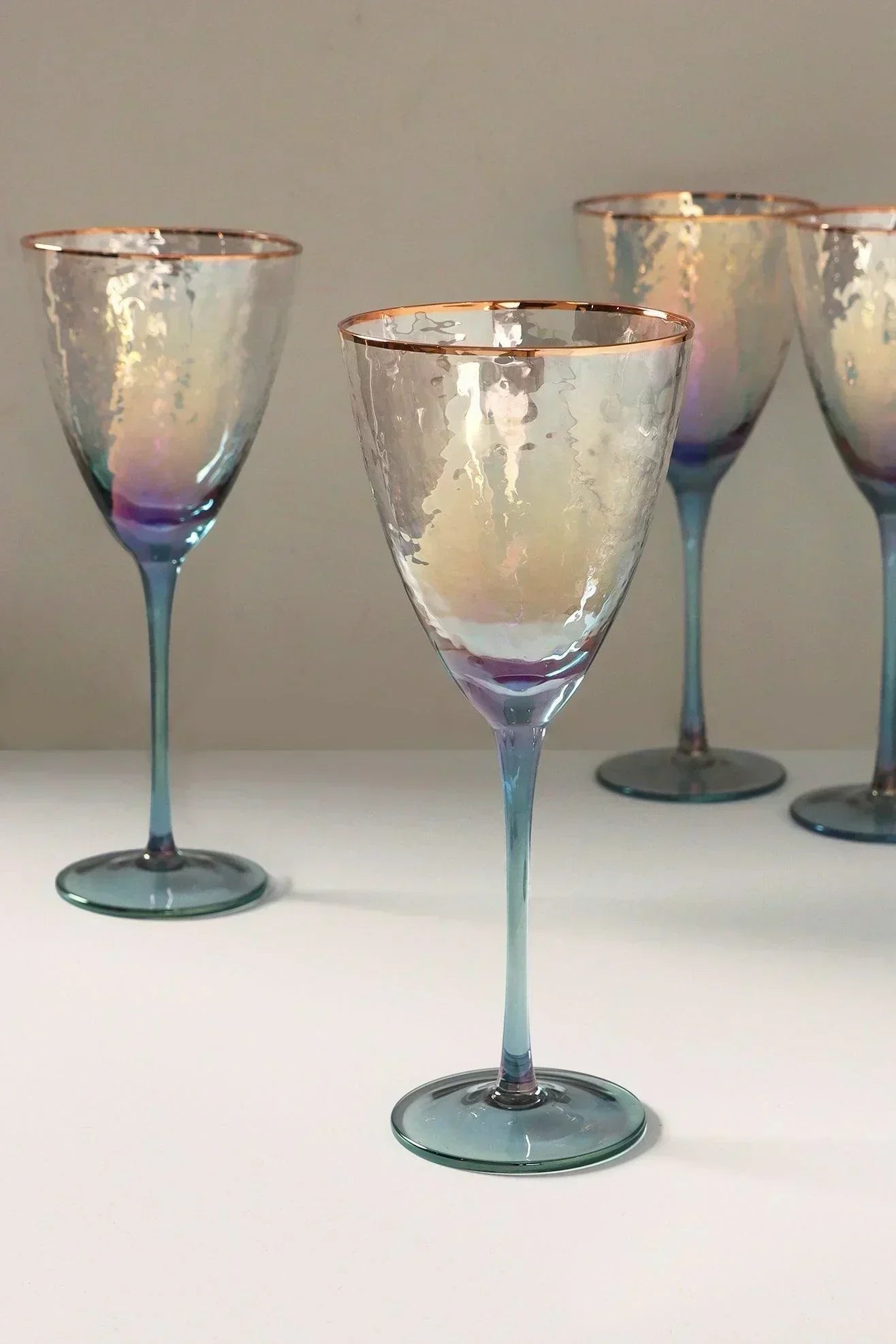
Ein gutes Weinglas hat einen Kelch, der großzügig genug ist, um den Wein atmen zu lassen, und einen Stiel, der fein genug ist, um eine warme Hand vom Kelch fernzuhalten. Handvollendetes Glas trägt kleine Abweichungen — eine leise Struktur, eine kaum wahrnehmbare Unregelmäßigkeit am Rand —, die Kerzenlicht so einfangen, wie maschinengepresstes Glas es nicht vermag. Unsere Weingläser in irisähnlichem Grau mit Hammerschlag sind dafür ein Beispiel: Die gehämmerte Oberfläche wirft Licht über den Tisch, und das sanfte Grau steht schön zu einer hellen Leinendecke ebenso wie zu einem dunkleren, theatralischeren Arrangement.
Rot, Weiß und das Argument für ein universelles Glas
Die Tradition verlangt einen weiteren Kelch für Rotwein und einen schmaleren für Weißwein. Für einen Weinkeller ist das ein guter Rat, doch die meisten Häuser haben weder den Schrankraum — noch den Wunsch —, vier Sätze Stielgläser aufzubewahren. Ein einziges, wohlüberlegtes universelles Weinglas mit mittlerem Kelch, der beiden Weinen schmeichelt, ist die ehrlichere Wahl für das tägliche Empfangen. Heben Sie sich die spezialisierten Formen auf, wenn Sie in sie hineingewachsen sind, und lassen Sie einen ausgezeichneten Satz die Woche tragen.
Die Cocktailstunde, und das Glas, das ihren Ton angibt
Ein Cocktail ist ebenso Zeremonie wie Getränk, und das Glas ist der Ort, an dem diese Zeremonie beginnt. Ein Martini, gehoben aus einer feinrandigen Coupe oder einem angemessen gewichteten Cocktailglas, schmeckt schlicht mehr nach Anlass.
Für die Aperitifstunde wählen Sie einen Satz mit ein wenig Präsenz — ein goldener Rand, ein gehämmerter Kelch, ein Stiel mit Haltung. Unsere Martinigläser in irisähnlichem Grau mit Hammerschlag und Goldrand gehören zu diesem Moment: schön im Leeren, noch schöner in der Hand. Im weiteren Glaswaren-Edit finden Sie die Cocktail-, Coupe- und Becherformen, mit denen sich ein Getränkewagen anrichten lässt, der durchdacht statt zusammengestellt wirkt. Wählen Sie nach dem Getränk, das Sie tatsächlich mixen — ein Negroni will einen Becher, ein Martini will eine Coupe —, nicht nach dem Glas, das auf einem Foto am besten aussieht.
Champagner, und Flöte gegen Coupe
Flöte und Coupe sind keine wirklichen Rivalen; sie sind zwei verschiedene Stimmungen. Die Flöte, hoch und schmal, hält das Perlen der Bläschen länger und liest sich klar und modern. Die Coupe, weit und niedrig, ist das Glas eines älteren, langsameren Abends — ein wenig theatralischer, ein wenig weniger darauf bedacht, jede Blase zu bewahren.
Für eine größere Runde ist die Flöte die praktische Wahl; für eine leise Feier zu zweit ist die Coupe die romantischere. Ein Satz wie unsere Champagnerflöten in Perlglanz mit Hammerschlag und Goldrand verbindet beide Welten — fein genug für einen Toast, schön genug, um zwischen den Anlässen auf einem Tablett ausgestellt zu bleiben. Neigt Ihr Empfangen sich zum festlichen Ende des Jahres, trägt ein Satz mit metallischem Finish die Saison, ohne dass weiter etwas hinzuzufügen wäre.
Das Alltagsglas, das seinen Platz verdient
Nicht jedes Glas ist für einen Anlass gemacht. Der Becher — für Wasser, für den Saft zum Frühstück, für einen Whisky am Ende des Tages — ist das meistgenutzte Stück in den meisten Küchen, und zugleich das, das am häufigsten beiläufig gewählt wird. Er muss es nicht sein.
Ein geprägter oder sanft strukturierter Becher, etwa unsere Dario-Becher mit Sonnenblumenprägung und Goldrand, verwandelt ein gewöhnliches Glas Wasser in etwas, das wohlüberlegt wirkt. Es sind die Gläser, die in Reichweite leben statt hinter Schranktüren, und sie sollten also zugleich robust und schön sein. Neben Ihren Stücken aus Küche und Esstisch hebt ein guter Alltagsbecher leise das Niveau jeder Mahlzeit zu Hause, nicht nur jener mit Gästen.
Wählen nach Farbe, Saison und Arrangement
Glas ist eine der einfachsten Möglichkeiten, die Temperatur eines Tisches zu verändern, ohne etwas Neues für den Raum zu kaufen. Klares und hellgraues Glas liest sich kühl und architektonisch — zu Hause in einer Stadtwohnung oder einer reduzierten Küche. Glas mit Gold- oder Roseraind wärmt ein Arrangement und passt zu den dunkleren Monaten und zur festlichen Tafel. Irisähnliche und Perlglanz-Finishes liegen dazwischen und fangen das Licht ein, das der Raum gerade bietet.
Im Frühling und Sommer wirken hellere, klarere Stücke richtig zu Leinen und frischen Blumen; im Herbst und Winter kommen die wärmeren Ränder und metallischen Finishes zur Geltung. Sie müssen nicht alle besitzen — aber zu wissen, warum ein Satz zu Juni und ein anderer zu Dezember passt, lässt eine kleine Sammlung weit größer wirken, als sie ist. Stellen Sie Ihre Gläser zu den weiteren Tischaccessoires, und das Ganze liest sich als ein einziges, durchdachtes Arrangement.
Die Pflege handgefertigten Glases
Handgefertigtes und handvollendetes Glas belohnt ein wenig Sorgfalt und verlangt weniger, als man befürchtet. Die wichtigste Regel: per Hand spülen. Mit der Zeit ätzt die Spülmaschine feines Glas und lässt es eintrüben, und die Hitze ist hart zu Gold- und Metallrändern. Warmes Wasser, ein Tropfen milde Seife und ein weiches Tuch genügen.
Trocknen Sie mit einem Leinentuch, statt die Gläser abtropfen zu lassen, was Spuren hinterlässt, und stellen Sie Stielgläser aufrecht ab, nicht auf den Rand, was den empfindlichsten Teil des Glases belastet. So behandelt, hält ein guter Satz Jahre und gewinnt die feine, schöne Patina des Gebrauchs statt der Stumpfheit der Vernachlässigung. Das ist das stille Argument für weniger, aber bessere Stücke: Sie sind gemacht, um mit Ihnen zu leben.
Eine Glassammlung aufbauen, die bleibt
Eine vollständige, durchdachte Sammlung ist kleiner, als die meisten meinen. Ein Satz universeller Weingläser für den Alltag. Ein Satz Champagnerflöten oder -coupes für Festliches. Ein Cocktail- oder Martini-Satz für die Aperitifstunde. Und ein Alltagsbecher, der sich bei jeder anderen Mahlzeit beweist. Vier Sätze, gut gewählt, tragen nahezu jeden Abend, an dem Sie wahrscheinlich empfangen.
Beginnen Sie mit dem Stück, das Sie am meisten nutzen werden — fast immer das Weinglas — und fügen Sie die anderen hinzu, wenn das Jahr Ihnen den Anlass gibt. Der gesamte Glaswaren-Edit, zusammen mit unseren Signature-Stücken, ist dafür gemacht, langsam gesammelt und lange behalten zu werden, jeder Satz handvollendet, um sich angenehm neben den nächsten zu fügen. Ziel ist nicht ein voller Schrank, sondern ein Schrank, in dem alles greifen lassenswert ist.
Häufig gestellte Fragen
Welche Glaswaren brauche ich wirklich, um gut zu empfangen?
Vier Sätze decken nahezu alles ab: ein universelles Weinglas für den Alltag, Champagnerflöten oder -coupes für Festliches, ein Cocktail- oder Martini-Satz für die Aperitifstunde und ein Alltagsbecher für Wasser und beiläufige Getränke. Beginnen Sie mit dem Weinglas, das Sie am meisten nutzen werden, und bauen Sie den Rest auf, wenn das Jahr Ihnen den Anlass gibt.
Soll ich für Champagner eine Flöte oder eine Coupe wählen?
Beide haben ihren Platz. Eine Flöte ist hoch und schmal, hält die Bläschen länger und liest sich klar und modern — die praktische Wahl für eine größere Runde. Eine Coupe ist weit und niedrig, ein wenig theatralischer und passt zu einer langsameren, romantischeren Feier zu zweit. Viele Gastgeber halten je einen Satz bereit und wählen nach der Stimmung des Abends.
Darf ich handvollendete Glaswaren in die Spülmaschine geben?
Besser nicht. Spülmaschinen ätzen feines Glas mit der Zeit und lassen es eintrüben, und die Hitze ist besonders hart zu Gold- und Metallrändern. Spülen Sie handgefertigte Glaswaren per Hand in warmem Wasser mit etwas milder Seife, trocknen Sie sie mit einem Leinentuch und stellen Sie Stielgläser aufrecht ab. So behandelt, hält ein guter Satz Jahre.
Reicht ein universelles Weinglas wirklich, oder brauche ich getrennte für Rot und Weiß?
Für die meisten Häuser schmeichelt ein einziges, wohlüberlegtes Universalglas mit mittlerem Kelch sowohl Rot- als auch Weißwein und spart erheblich Schrankraum. Eigene Formen für Rot und Weiß sind eine Freude, wenn man in sie hineingewachsen ist, aber dort muss eine Sammlung nicht beginnen. Ein einziger ausgezeichneter Satz trägt die Woche mit Eleganz.
Wie wähle ich Glaswaren, die zu meinem Tisch passen?
Wählen Sie nach Farbe und Saison. Klares und hellgraues Glas liest sich kühl und architektonisch und passt zu Frühling und Sommer; goldene oder roséfarbene Ränder und metallische Finishes wärmen ein Arrangement und begleiten die festlichen Monate. Stimmen Sie das Glas auf das Licht ab, das Ihr Raum bietet, und auf die anderen Stücke, die bereits auf dem Tisch stehen, sodass sich das Ganze als ein durchdachtes Arrangement liest.
Ein letzter Gedanke
Gutes Glas ist selten das, was ein Gast ausdrücklich lobt, und immer das, was er spürt. Das Gewicht in der Hand, die Art, wie ein gehämmerter Kelch das Kerzenlicht einfängt, das Gefühl, dass der Abend bedacht wurde, bevor irgendjemand kam — das sind die Details, die ein eingeschenktes Getränk in ein serviertes verwandeln. Wählen Sie wenige Stücke mit Bedacht, pflegen Sie sie und lassen Sie sie zu jener Art Glas reifen, an der man ein Zuhause erkennt.
Beginnen Sie mit unserem Glaswaren-Edit und den Weingläsern in seinem Herzen. Mit über 700 verifizierten Bewertungen auf Trustpilot und über 2.000 Shop-Bewertungen auf Judge.me sind unsere Stücke in Häusern im Vereinigten Königreich, in den USA, in Europa und Australien zu Hause.
Weiterlesen
- Die Kunst eines langen Mittagessens: Glaswaren, in die man gern einschenkt — Über die Gläser, die einen Nachmittag in die Länge ziehen.
- Einen durchdachten Tisch decken: Keramik, Glas und die stille Kunst des Empfangens — Wie die Stücke auf einem Tisch zusammenwirken.
- Das Getränketablett zur Dämmerung — Ein Getränketablett zusammenstellen, das durchdacht wirkt.